Faux olive trees introduce branching forms and muted green foliage into interiors without the growing conditions a living tree requires. Their effect depends on proportion, placement and detail—not simply on choosing the tallest tree available.
For homes, restaurants, hotels and retail interiors, consider how the tree will work with the surrounding furniture, finishes and circulation routes.
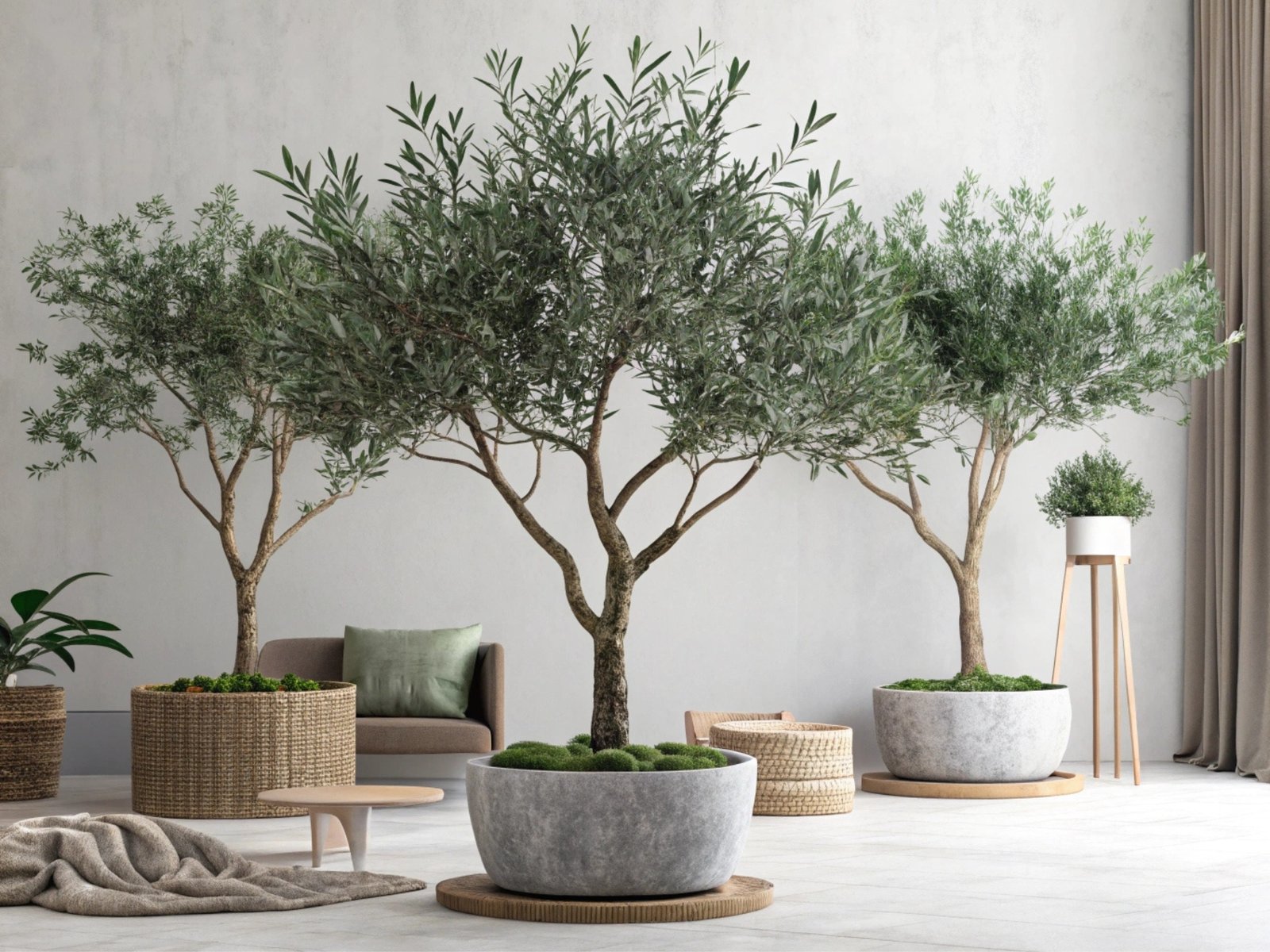
What gives an olive tree its distinctive appearance?
The olive-tree look comes from narrow leaves, green and silvery tones, and a branching structure with spaces between foliage clusters. Artificial versions vary, so assess the actual product rather than relying on its name.
For close-view locations, check:
- Leaf shape, surface finish and colour variation.
- Branch connections and visible joints.
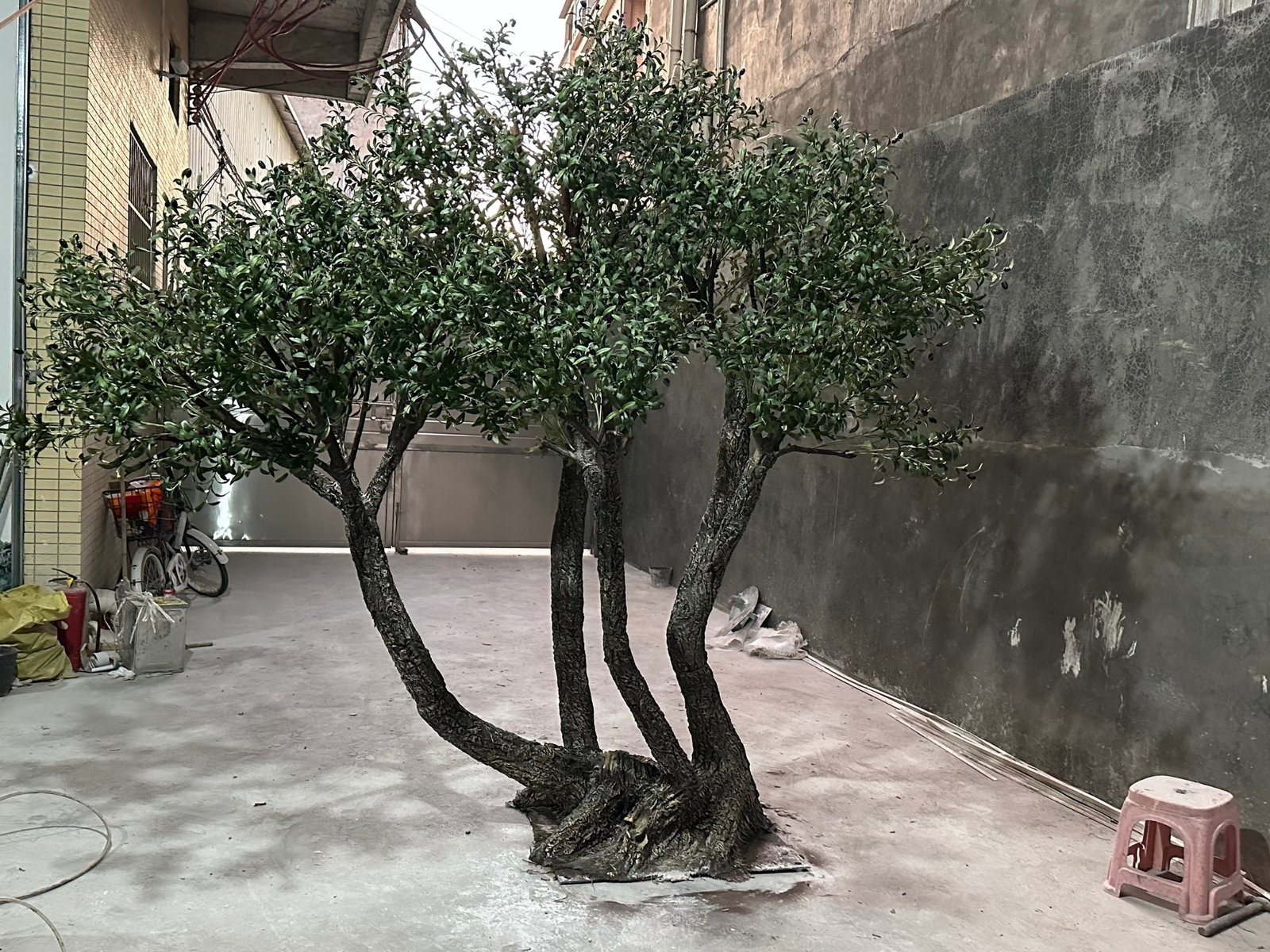
- Trunk texture and colouring.
- Canopy proportions from different viewing directions.
Request both full-tree photographs and close-up images. A full view helps assess the silhouette; detail images show features that may be noticeable beside seating or reception desks.
Which interior styles work with faux olive trees?
Mediterranean interiors
Olive foliage can complement plaster, warm stone, timber and terracotta tones. Coordinate the planter with these materials so the arrangement feels connected to the room.
Modern and minimal interiors
An open canopy can introduce an organic shape beside clean architectural lines. Leave space around the branches to preserve sightlines and avoid crowding a compact room.
Rustic and natural interiors
Textured trunks and muted foliage can work alongside timber, woven materials and earthy colours. Balance the visual weight of the tree, planter and nearby furniture.
These are starting points rather than fixed rules. The actual tree form and room proportions matter more than the style label.

How do you choose the right size?
Measure canopy width as well as overall height. A narrow trunk does not necessarily mean a small footprint once the branches are arranged.
Before ordering, confirm:
- Finished height, including the planter or raised platform.
- Canopy width and depth.
- Clearance from doors, walkways, tables and chairs.
- Distance from lights, signs and ceiling services.
- Delivery access and assembly space.
Ask whether the dimensions describe the tree before or after branch shaping, and whether the planter is included.
Where should you place a faux olive tree?
Choose a position that supports the use of the room.
In a restaurant, check how the canopy works around seating and circulation. In a lobby, review visibility from the entrance and reception desk. In retail spaces, avoid blocking merchandise, signage or access routes.
Review the proposed tree from the directions people will approach it. A tree placed against a wall may need a different branch arrangement from one viewed on all sides.
Artificial foliage does not need growing light, but lighting still affects its appearance. Review the finish under the intended room lighting where possible.
How should you choose the planter?
Select the planter for both appearance and installation. Confirm its internal dimensions, the supplied tree base and the proposed fixing arrangement.
For commercial locations, coordinate stability and anchoring with the supplier and installation team. Decorative top dressing should not prevent access to connections that need inspection.
What should you confirm before ordering?
Prepare the target height and canopy width, quantity, destination and photographs or drawings of the space.
For a standard potted tree, confirm the supplied dimensions, base and packing. For a custom installation, agree on the trunk arrangement, canopy form and assembly approach.
If the location is outdoors or has fire-performance requirements, request a suitable specification and supporting information. An indoor decorative tree should not automatically be treated as suitable for an exposed terrace or a project requiring particular test documentation.
Still deciding between a living tree and an artificial option? Read our comparison of real and artificial olive trees.
To discuss an artificial olive tree for your space, contact Oakco with your dimensions, reference images and installation requirements.