No. Artificial trees can achieve a convincing appearance without a natural wood trunk. The result depends on how the trunk’s shape, bark texture, colour and branches work together.
Some of our European customers have specifically requested an alternative to natural wood trunks. They have also praised the realism of our fabricated trunks, describing them as looking like real trees.
At Oakco, we develop artificial tree trunks through shaping, surface texture, layered colour and careful branch transitions. We then match the materials and construction to the project. A natural-looking surface does not establish what is inside the tree, so the agreed specification must identify the actual materials used.
Why Some Customers Request an Alternative to Natural Wood Trunks
Customers may appreciate the appearance of natural timber while preferring a different construction for their project.
We clarify the reason behind the request before recommending a trunk. Material preferences, design dimensions and installation conditions can lead buyers toward different solutions.
These conversations reflect feedback from some of our European customers. They do not establish a Europe-wide trend away from natural wood.
A clearer material specification
“No real trunk” is not a complete material specification.
It may mean no exposed natural bark, no solid timber trunk, or no natural wood components anywhere in the tree. We confirm which requirement applies before developing the proposal.
This distinction matters because an artificial outer surface can cover different internal structures. The trunk core, branches and surface finish should be described separately where the buyer requires that detail.
A shape developed around the space
A natural trunk provides its own individual form. A fabricated trunk offers another way to develop the silhouette around a project brief.
A restaurant may need branches to extend over seating while keeping the lower area open. A hotel lobby may require a broad canopy within a limited footprint. A column-integrated tree must respond to an existing structure.
We review trunk diameter, curves, branching height and canopy position together. These decisions help us create a form that fits the space and the intended viewing directions.
For projects involving several trees, we can also discuss shared proportions and finishes while retaining variation in the visible details.
Import and material information
Some buyers want to clarify the sourcing, processing and documentation associated with natural wood components.
EU plant-health requirements depend on the relevant commodity and conditions. Buyers can refer to the European Commission’s plant-health import guidance when reviewing their shipment.
Packaging is a separate consideration. A tree without a natural wood trunk may still use wooden crates or pallets subject to applicable requirements. The European Commission’s wood packaging guidance explains the relevant ISPM 15 requirements and exemptions.
We therefore avoid treating a fabricated trunk as a blanket exemption from import checks.
How Oakco Recreates the Character of a Natural Trunk
When a customer says a trunk looks real, the impression usually comes from several details working together.
We develop the overall silhouette first, then refine the bark texture, colour and connections. Close-up detail needs to support the complete tree rather than distract from an unnatural shape.
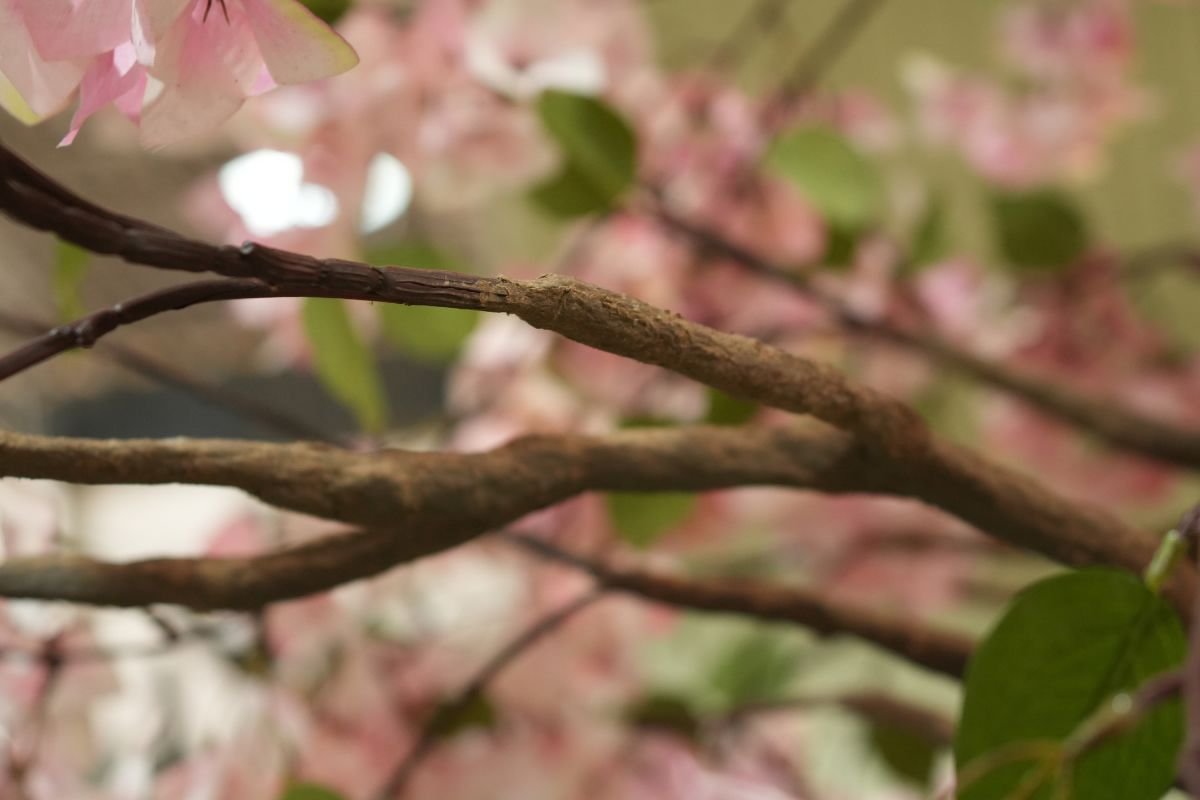
Shaping the trunk and main branches
We begin with the relationship between the trunk and canopy.
The trunk needs an appropriate diameter and a gradual change in thickness. Curves and branch junctions should relate to the larger form. The base also needs to connect visually with the planter, floor or surrounding landscape.
We review the tree from the intended viewing sides. A tree beside a wall has different requirements from one standing in the centre of a lobby.
This stage establishes the proportions that later surface work will follow. Detailed bark cannot fully correct a trunk that is too bulky, too straight or poorly matched to its crown.
Giving bark texture direction and variation
Bark texture should follow the tree’s form.
We examine how grooves travel around curves, how raised areas develop near branch junctions and how the texture changes across the surface. Repeating the same impression uniformly can make a large trunk appear patterned.
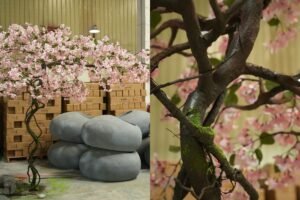
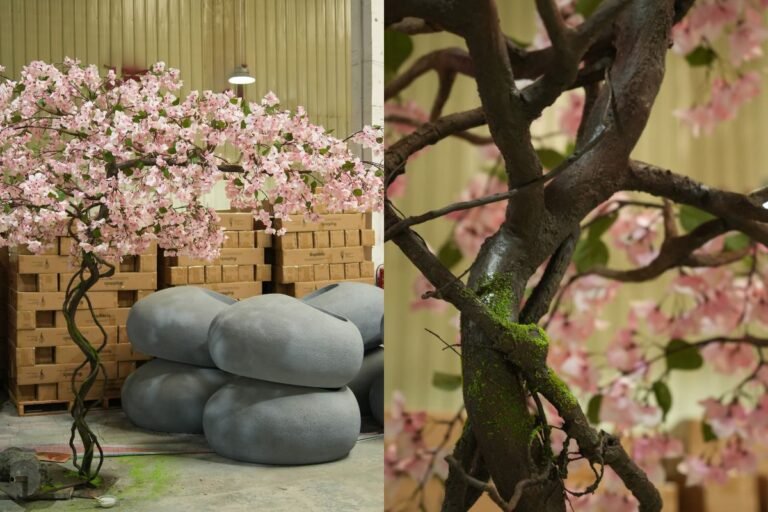
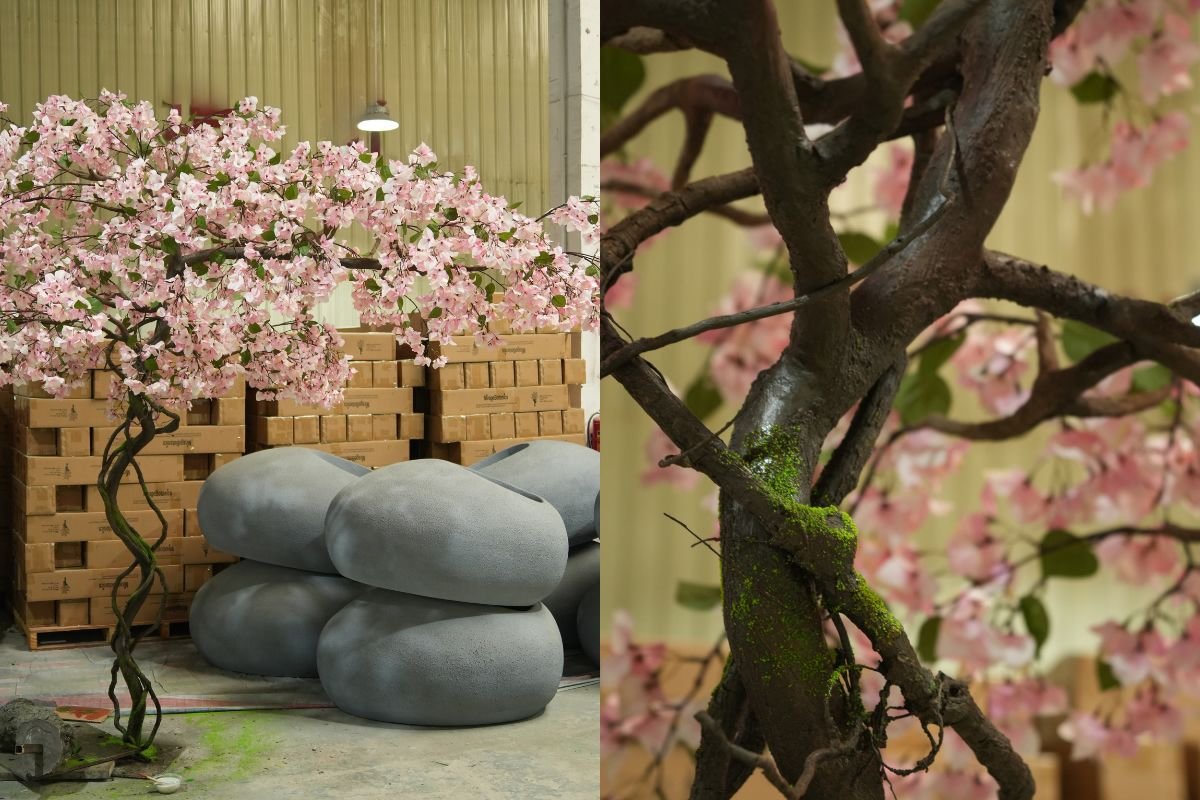
Our showroom’s cement-sculpted cherry blossom tree provides one example. The team built the form around a steel framework and wire mesh, applied cement in stages, and used a small bark-texture mould to develop the surface grain.
That is one fabrication method, rather than a description of every Oakco tree. Materials and construction vary with the selected design.
Our column-to-cherry-blossom tree craftsmanship story shows that process in more detail.
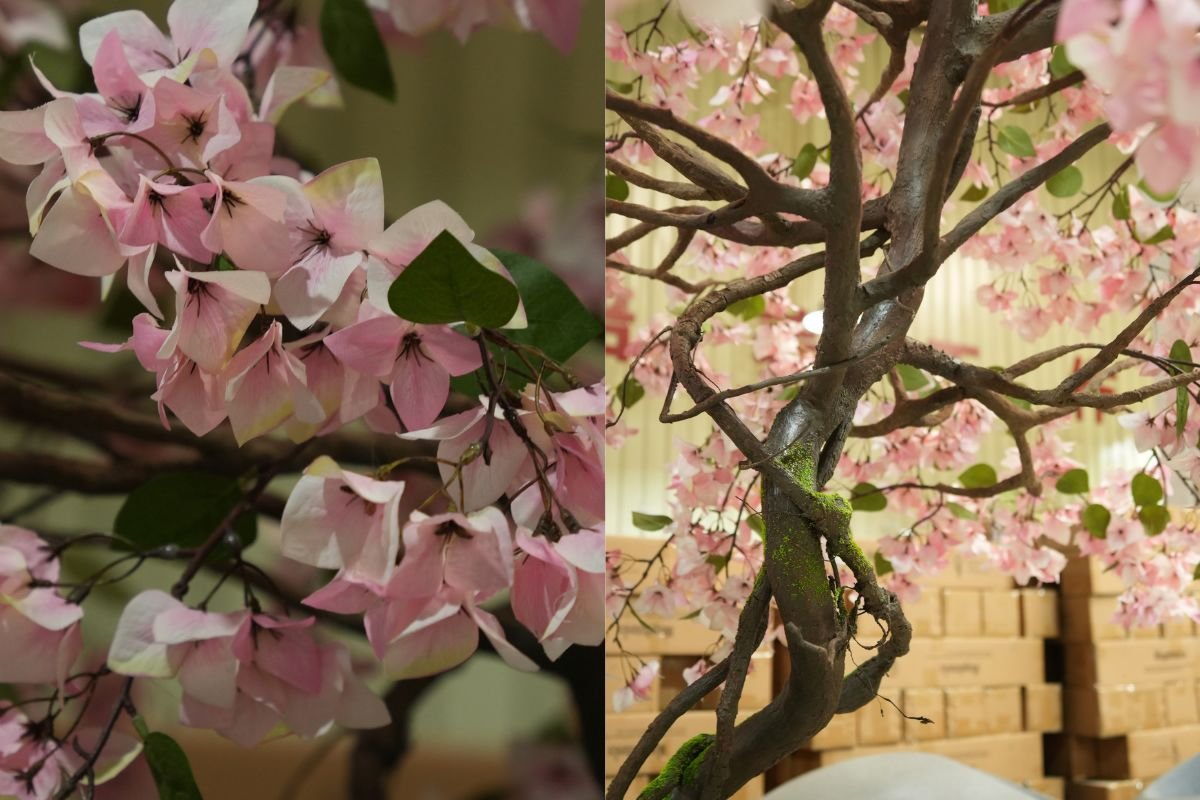
Refining the surface with layered colour
A single flat colour can reduce the depth of a textured surface.
We review the colour across the whole trunk before assessing individual grooves and raised areas. Differences in tone help the relief remain visible and prevent the finish from looking uniform.
For the cement-sculpted showroom tree, the team adjusted the colour several times. After inserting branches, we reviewed the components together and made further touch-ups around the transitions.
This assembled review matters. A branch that looks suitable on its own may reveal a colour difference once connected to the trunk.
Checking the connections as part of the finished tree
The trunk, branches and canopy should read as one form.
We check visible junctions for abrupt changes in thickness, direction, texture or colour. On sectional designs, pre-packing assembly lets us review the relationship between the finished parts.
These details become particularly noticeable where guests can walk beside the trunk, sit beneath the branches or take close photographs.
Choosing a Trunk Around the Project
Natural wood and fabricated trunks can both be appropriate. The useful question is which construction meets the project’s appearance, material and installation requirements.
We compare the options against the brief. A fabricated trunk is not automatically lighter, more durable, fire-retardant or suitable for outdoors simply because it is not natural wood.
| Project consideration | Natural wood trunk | Fabricated trunk |
|---|---|---|
| Natural appearance | Uses the individual form and surface of selected wood | Recreates tree character through shaping, texture and colour |
| Shape and proportions | Depends partly on suitable natural pieces being available | Can be developed around a proposed silhouette and dimensions |
| Material requirements | Requires clear information about the wood and processing | Requires clear information about the core, surface and branches |
| Transport and installation | Depends on the trunk form, weight and connections | Can incorporate planned sections where suitable; weight and access still need confirmation |
Confirm construction and assembly details
The selected materials affect the tree’s weight, section sizes and handling requirements.
A cement-sculpted tree and a fibreglass tree should not be treated as the same construction. Buyers should confirm the finished weight, largest component, access route and fixing approach for the proposed tree.
We use site dimensions and installation information to discuss how the design can be delivered and assembled.
Match performance documents to the actual materials
Realism and technical performance are separate parts of the specification.
Where fire documentation is required, the report must be reviewed against the materials and configuration being supplied. A foliage test report should not be presented as proof of the performance of a different trunk material or the complete assembled tree.
For fire-resistant artificial tree requirements, we ask buyers to share the requested standard and documentation needs before confirming the configuration.
Outdoor projects also require a separate review of exposure, finish, structure and fixing conditions.
How to Review Trunk Realism Before Ordering
A finished photograph is useful, but one view cannot show every part of a tree.
We recommend reviewing the complete tree, a view from approximately one metre, and close-up details. Together, these views help buyers assess proportion, texture, colour and connections.
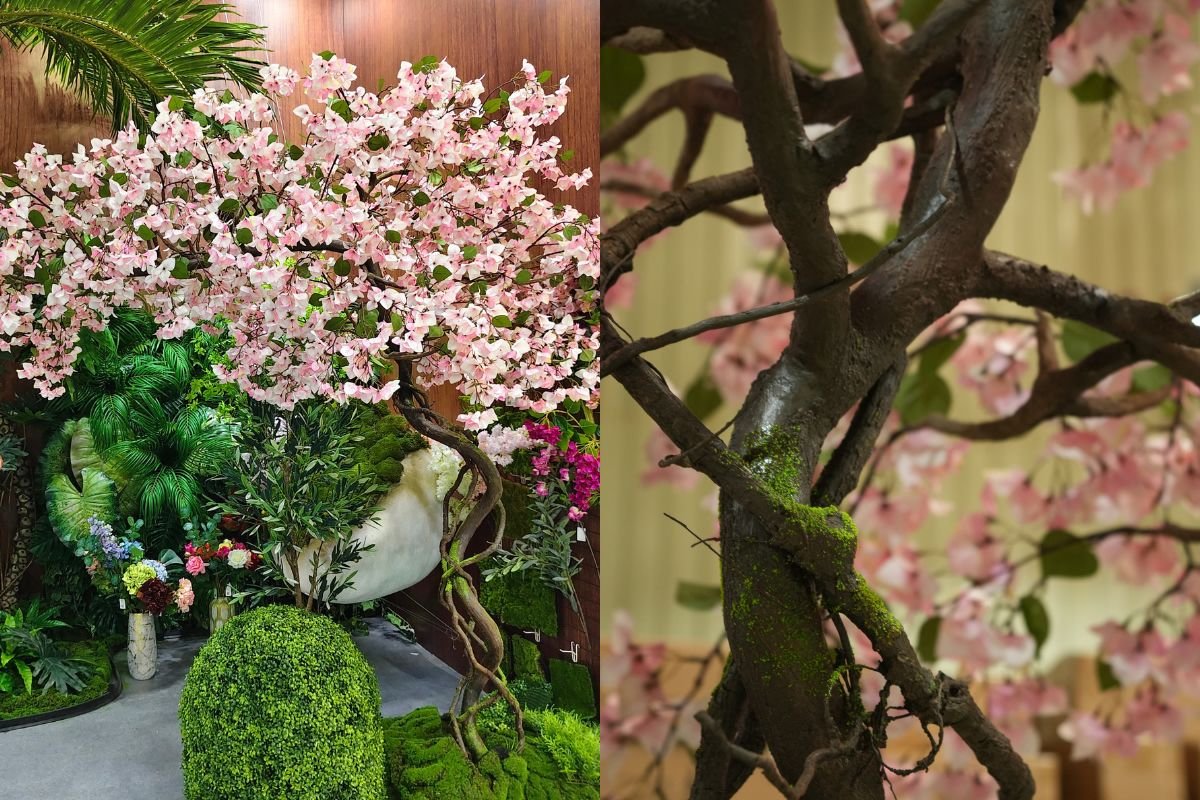
Start with the complete form
A full-tree view reveals the relationship between the trunk and canopy.
Review the tree’s height, crown width, trunk taper and branch direction. Where several sides will be visible, request views from those directions.
A close-up can show detailed craftsmanship while concealing an awkward overall proportion. The complete view provides the context for judging the details.
Move closer to inspect the finish
At approximately one metre, examine how the bark relief, colour and branch transitions work together.
Then use close-ups to inspect specific surfaces and junctions. These images are most useful when the lighting is clear and the relevant area is easy to identify.
| Review view | What to assess |
|---|---|
| Complete tree | Silhouette and trunk-to-canopy proportion |
| Front and side views | Curves, branching direction and viewing balance |
| Approximately one metre | Combined effect of texture, colour and transitions |
| Bark close-up | Surface relief and finishing detail |
| Connection close-up | Junctions between trunk and branches |
| Pre-packing assembly | How the finished sections fit together |
Give feedback on a specific detail
Precise feedback makes revisions easier to discuss.
A buyer might request a wider lower trunk, a less regular bark pattern, a different overall tone or a smoother visual transition at one branch connection.
Marked photographs and reference images give the team a clearer direction than a general request to “make it more realistic.”
For an initial proposal, please share:
- Installation location and destination
- Required tree height and canopy width
- Preferred trunk shape and reference images
- Quantity
- Access and assembly conditions
- Materials to exclude
- Required performance documentation
The feedback from our European customers reinforces a practical opportunity: a buyer can prefer an alternative to natural wood without giving up the natural appearance they want.
At Oakco, we address that requirement through the details of the trunk—its proportions, branching, bark, colour and connections—supported by a clearly agreed construction.
Send us your drawings or reference photographs to discuss a realistic artificial tree for your commercial space.