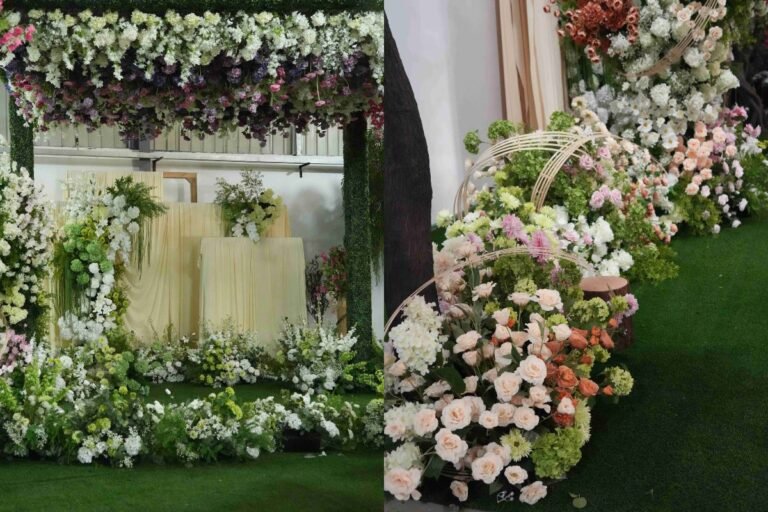
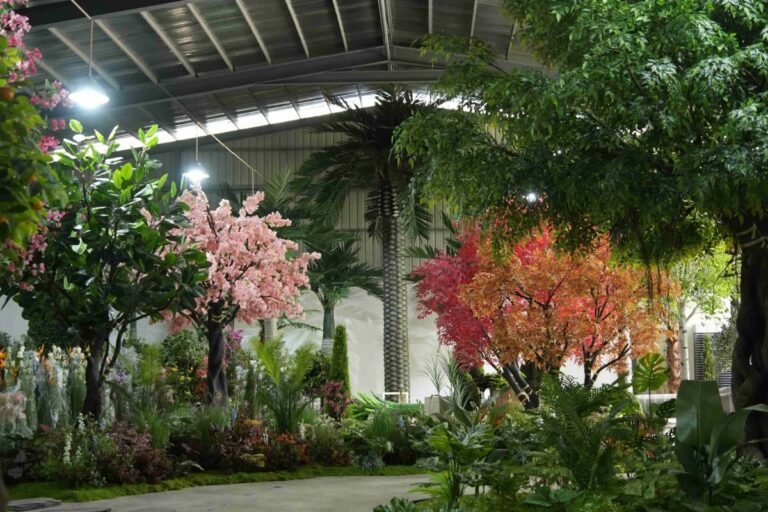
Beautiful flowers do not automatically create a complete wedding setting. When floral trees, arrangements and greenery are selected separately, their colours, proportions and placement can feel disconnected.
At Oakco, we planned our wedding showroom zone around one shared theme. We considered the entrance, floral backdrop, columns, overhead displays and ground-level arrangements together.
We combined two white cherry blossom trees at the entrance with roses, hydrangeas, lilies, dahlias and supporting greenery throughout the display. Boxwood-covered columns and beams connect the space, while different floral colour combinations give wedding professionals several styling directions to explore.
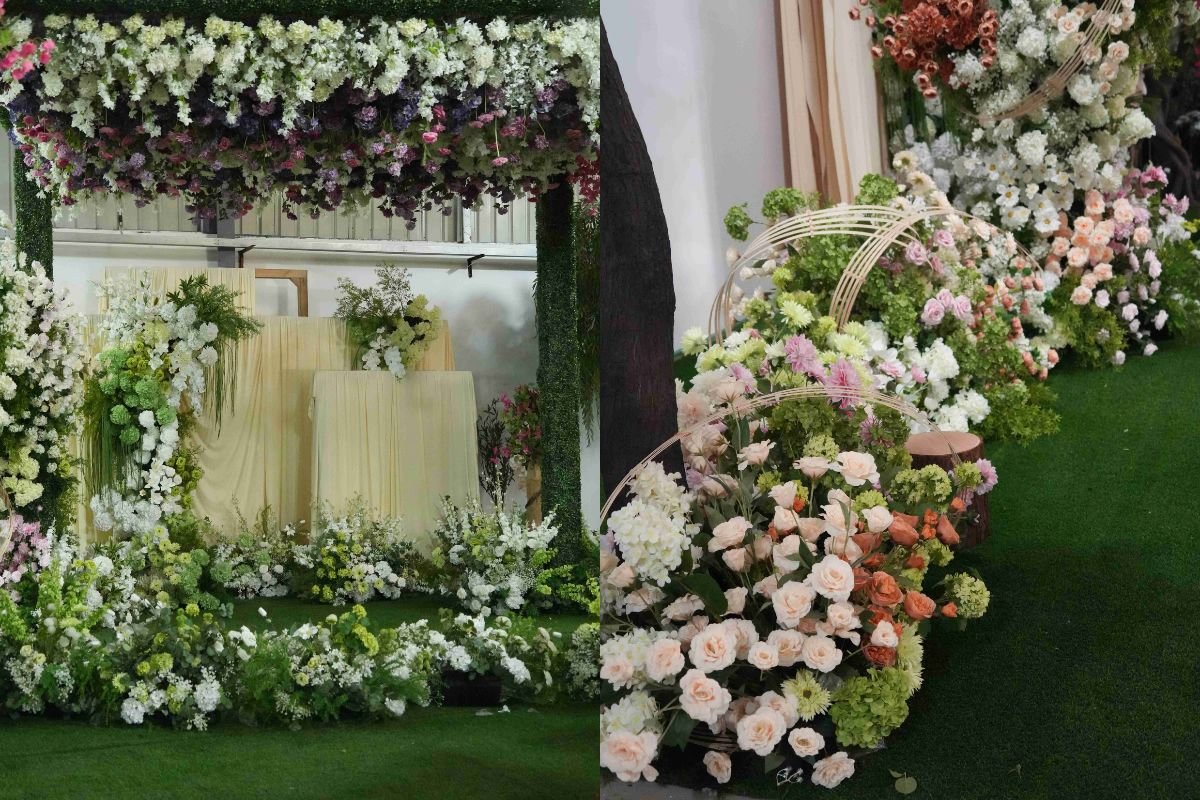
This is a wedding-themed display within our showroom in China. We use it to help wedding planners, event decorators, rental companies and wholesale buyers explore how individual products can work together.
Clients can discuss a complete floral setting or focus on selected elements, such as an entrance tree, a floral backdrop or coordinated arrangements.
Planning the Wedding Space from Entrance to Backdrop
We began by considering how visitors would approach the display and what they would see as they entered. The entrance needed a clear floral outline, while the interior needed several heights and viewing points.
We positioned two white artificial cherry blossom trees to frame the entrance, then developed the interior through backdrop arrangements, upright floral groups and lower planting. This connects the first view of the space with the details visitors discover inside.
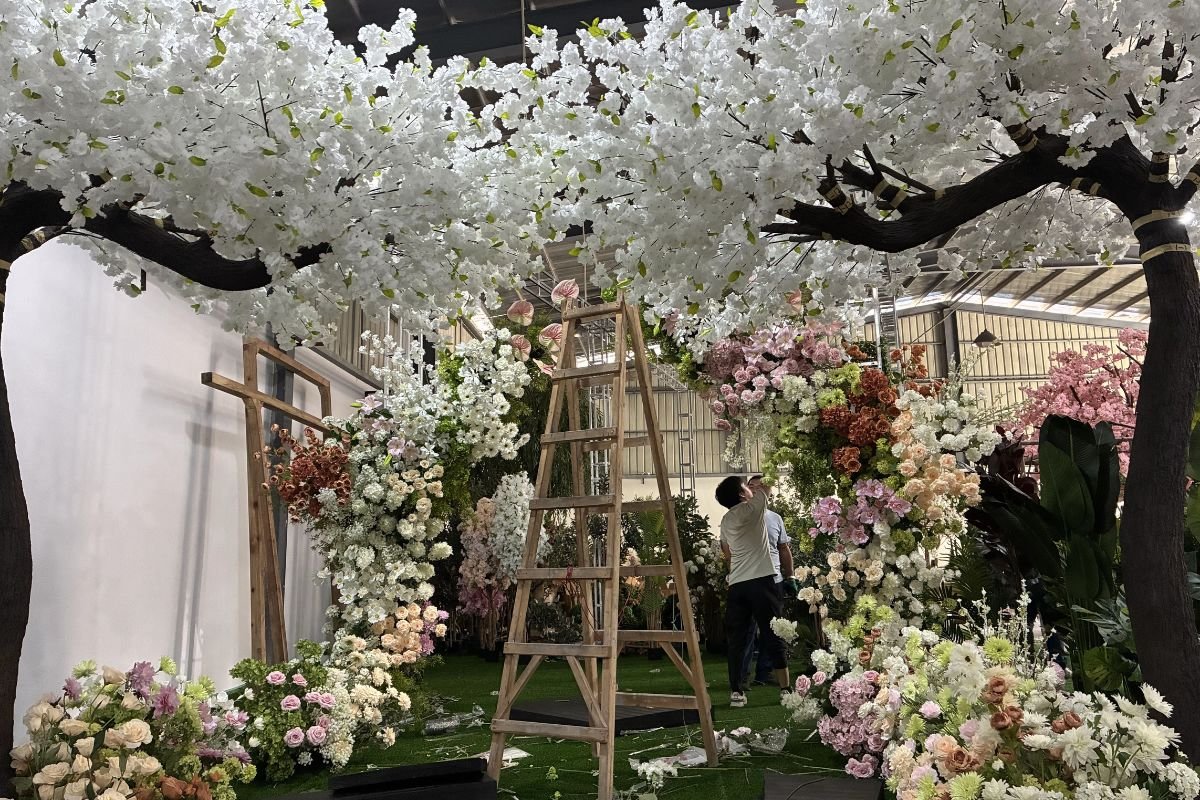
Framing the entrance with white cherry blossom trees
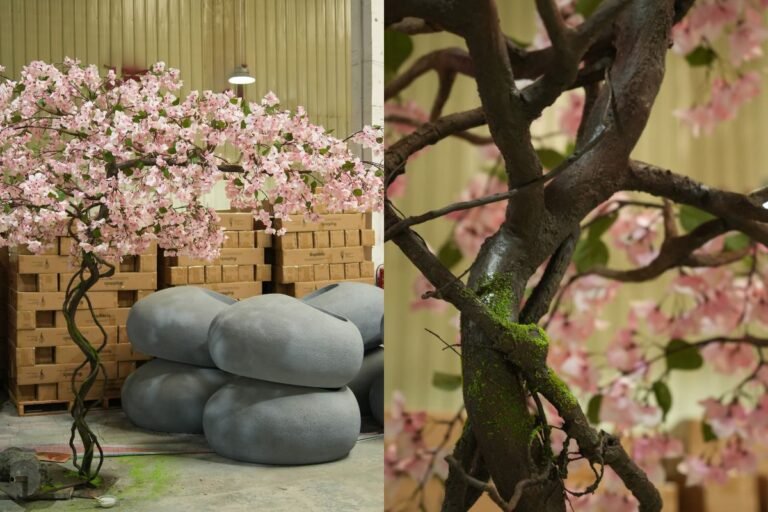
The two trees curve inward to create an arch-like entrance. Their white blossoms establish the wedding theme before visitors reach the smaller floral arrangements.
We consider the trees as a pair. Their height, canopy spread and branch direction need to work together while leaving a clear opening between the trunks.
White blossoms also provide a visual connection with the white flowers used throughout the interior. We repeat this colour at different heights so that the entrance feels related to the displays beyond it.
Our artificial cherry blossom trees can be discussed around the dimensions and visual requirements of a wedding entrance or venue feature.
Creating depth within the display
Inside the zone, we arranged flowers at ground level, along vertical structures and above the viewing area.
Fabric-covered backdrop panels provide a quieter surface behind the flowers. Taller arrangements frame parts of the backdrop, while lower groups extend the floral display toward the foreground.
We leave visible space between selected groups so that visitors can distinguish their shapes and compare the combinations. For a client’s venue, the arrangement would also need to respond to the floor plan, circulation and intended use of the space.
Building a Green Framework with Boxwood
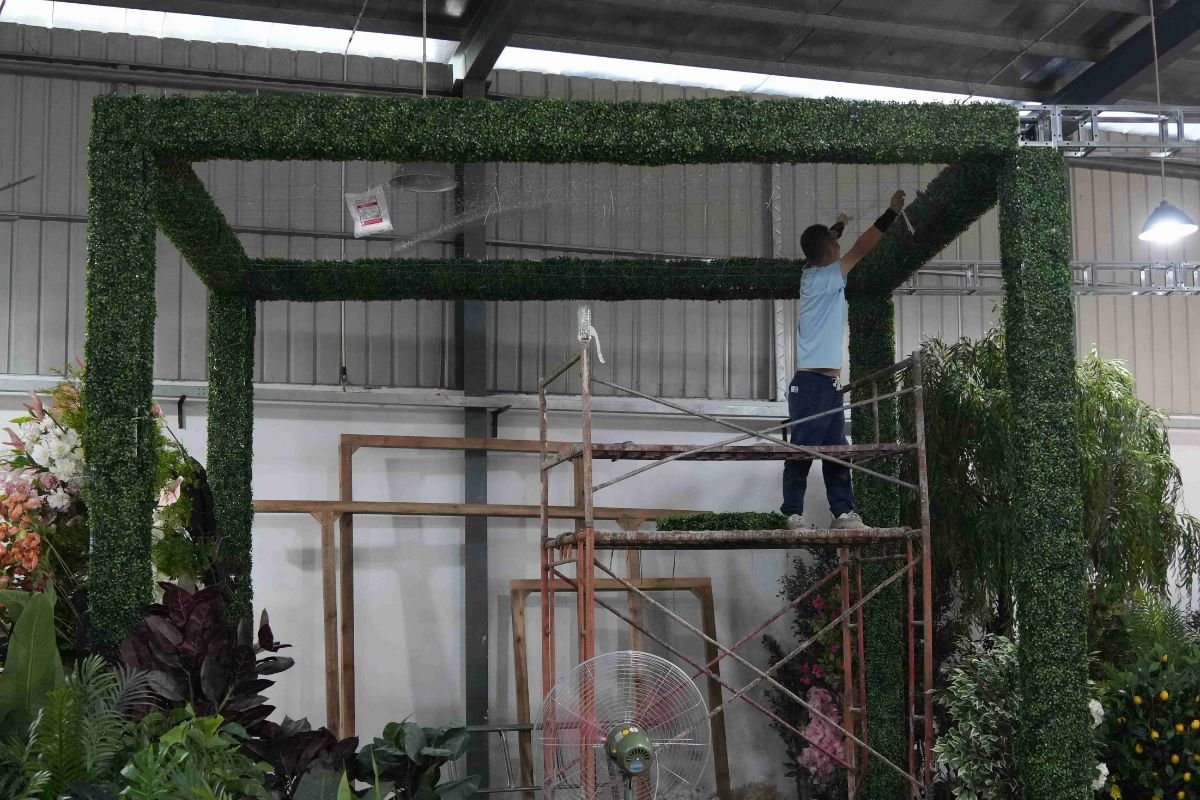
Columns and overhead beams are prominent parts of the showroom structure. We included them in the decorative scheme by covering selected sections with artificial boxwood.
The boxwood creates a continuous green framework across vertical columns and horizontal beams. It gives the flowers a consistent background and connects the overhead display with the arrangements below.
Connecting columns and beams
Our installation photograph shows a team member fitting the foliage around a column beside a covered horizontal section.
We review the visible edges, corners and junctions as the covering is installed. These areas matter because gaps can interrupt the green outline and expose the structure beneath.
The small leaves of the boxwood create a different texture from the larger flower heads. This helps the floral groups remain distinct against their background.
Using greenery at different scales
We use boxwood for a defined outline, then introduce looser greenery around the flowers.
Fine foliage softens the edges of dense arrangements. Trailing greenery extends selected groups downward. Broader leaves provide local contrast between flowers and finer stems.
The balance changes from one arrangement to another. In some areas, flowers cover most of the visible surface. Elsewhere, we leave more green space between floral groups to make their colours and outlines easier to see.
Matching Flowers by Colour, Shape and Height
Our wedding zone brings together several colour combinations. Each group offers a different direction for clients to compare.
We match flowers through colour, flower-head size, petal shape and stem direction. Rounded clusters establish volume, individual blooms create visible detail, and branching or trailing elements extend the arrangement beyond its centre.
White and green combinations
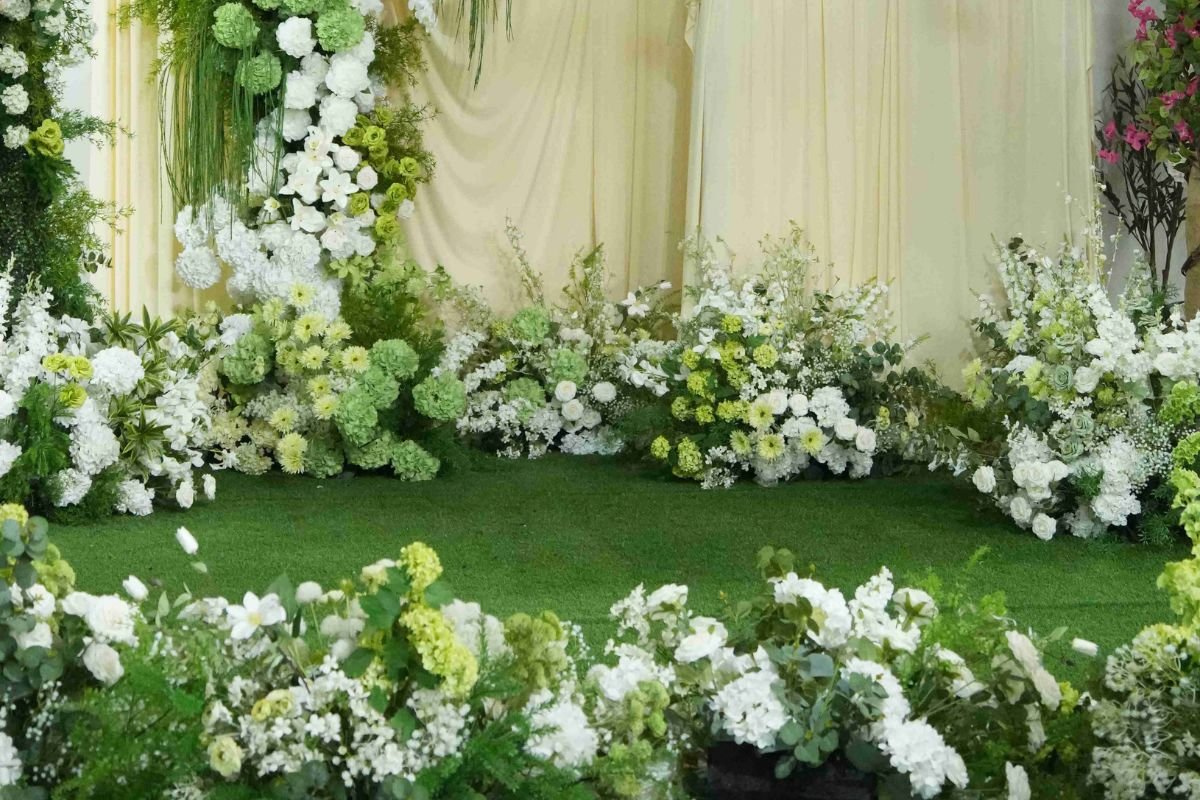
White flowers appear throughout the display, linking the entrance trees with the backdrop and lower arrangements.
Green hydrangeas add rounded shapes among the white blooms. Darker foliage provides depth behind them, while lighter green elements remain visible within the floral groups.
We vary the size and direction of the white flowers to retain detail within the pale palette. Some face the main viewing position; others angle outward or extend above neighbouring blooms.
Pink, peach and warmer accents
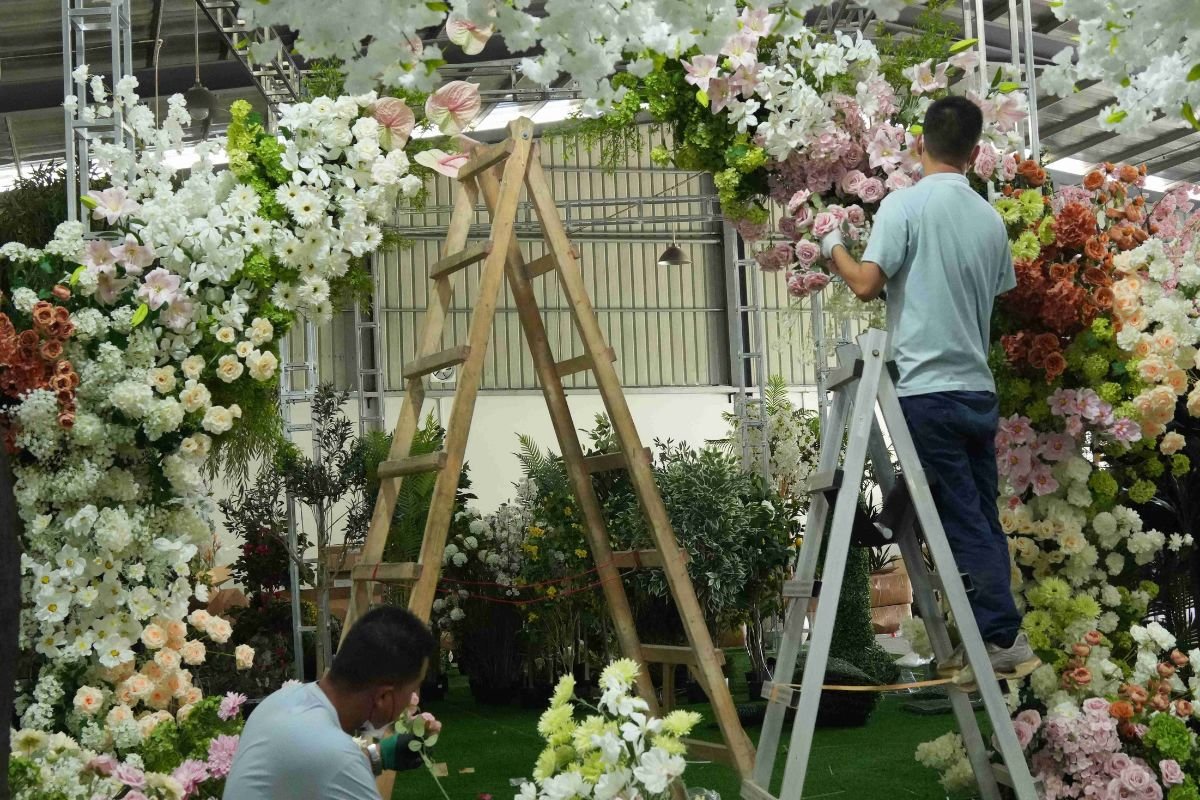
In another grouping, pale pink roses and soft peach flowers sit alongside white and green elements. Selected orange-brown accents introduce a stronger warm tone.
We place these colours in recognisable groups and repeat them in nearby areas. This gives the eye several points to follow while preserving differences between arrangements.
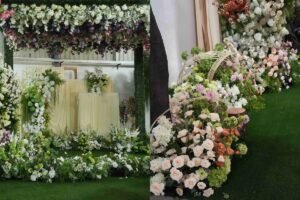
The close-up photograph shows how roses, hydrangeas and dahlias contribute different forms. Roses provide distinct individual blooms, hydrangeas build clustered volume, and dahlias introduce layered petal shapes. Lilies add a more open silhouette where their flowers can remain visible.
| Floral element | Role in the combination | What we review |
|---|---|---|
| Roses | Distinct blooms within larger arrangements | Colour, flower direction and spacing |
| Hydrangeas | Rounded clusters that build volume | Cluster size and overlap |
| Lilies | Open flower shapes extending from the group | Orientation and visibility |
| Dahlias | Layered petals and contrasting flower forms | Scale beside neighbouring blooms |
| Supporting greenery | Connections and softer edges | Leaf texture, spread and trailing length |
Purple and blue-purple overhead flowers
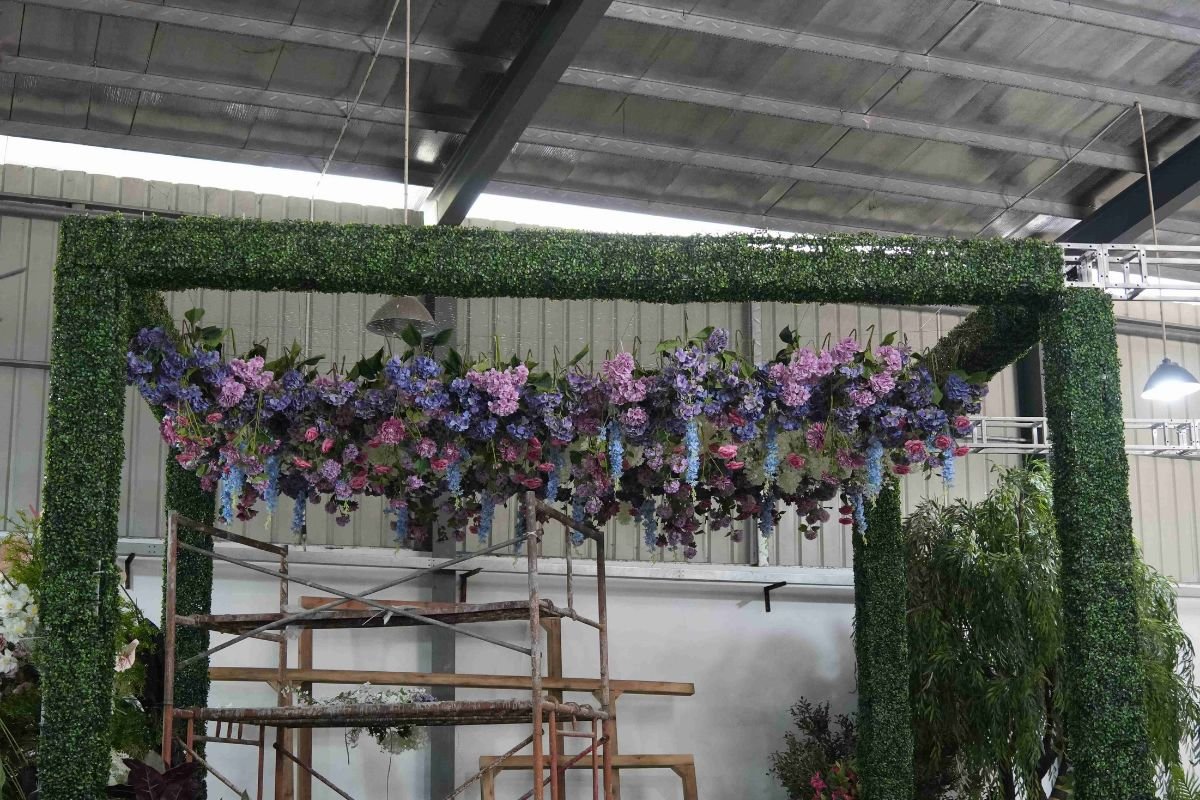
The overhead arrangement introduces purple and blue-purple tones among white flowers and greenery.
These colours create another styling direction within the same wedding-themed area. White flowers repeat a colour already present below, while the green framework links the hanging display to the columns.
We use this variation to discuss different palettes with clients. A project may select a restrained white-and-green combination, a softer pink scheme or a stronger purple accent.
Extending the Floral Design from Ground Level to Overhead Displays
A wedding display is viewed from several distances and directions. Ground-level flowers, vertical arrangements and overhead elements each contribute to that experience.
We developed the layers together, using lower floral groups to define the foreground, taller arrangements to frame the backdrop, and hanging flowers to bring detail into the upper part of the space.
Developing ground-level arrangements
Our lower arrangements repeat colours and flower forms used higher in the display.
Some groups sit close to the base of the backdrop. Others project farther into the foreground, creating changes in depth. Their heights also vary, allowing individual stems and flower heads to remain visible.
Pale curved decorative elements pass through selected flower groups. Their open outlines create a different rhythm beside the clustered flowers.
Adjusting the overhead layer on site
The installation photograph records our team positioning flowers along the covered upper framework.
We review how the flower heads face the viewing area, how far individual stems hang down and how the groups overlap. These adjustments affect whether the display reads as separate stems or a coordinated arrangement.
We also compare the overhead layer with the flowers below. Repeated colours help connect them, while differences in density preserve the shape of each group.
Helping wedding professionals select a coordinated range
The showroom lets clients examine combinations at full scale. They can compare an entrance tree with a backdrop arrangement, inspect flower details and assess how greenery changes the overall appearance.
For a specific project, useful starting information includes:
- Venue photographs or a floor plan
- Entrance width and available height
- Preferred colours and reference images
- Required floral elements and quantities
- Installation and access conditions
We can use these details to discuss suitable products, proportions and combinations. The showroom provides a starting point that can be adapted to the client’s setting.
Visit Oakco’s showroom to explore the wedding display, or send us your project references to discuss artificial flowers, blossom trees and coordinated greenery for your wedding or event business.