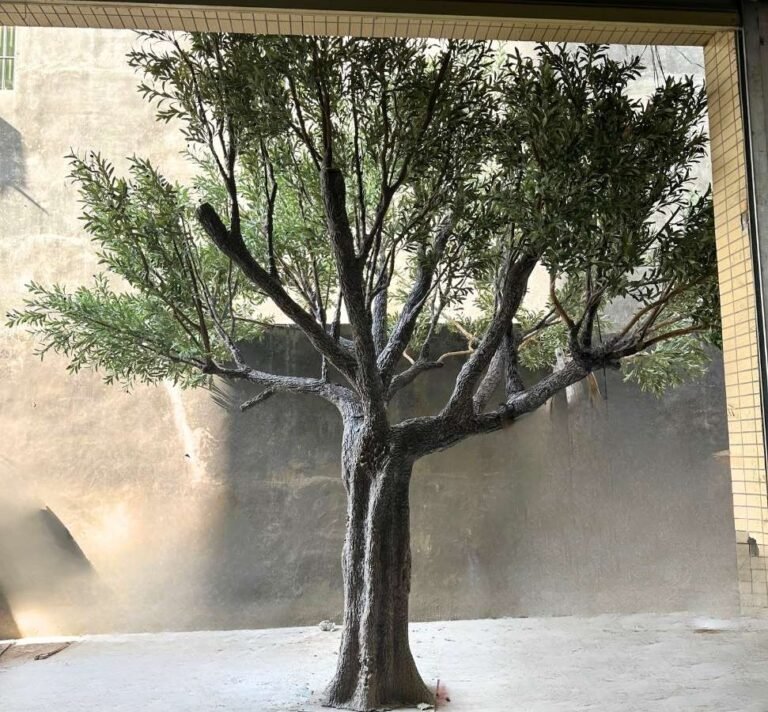
Is your landscape project a ticking time bomb? Many people forget that a 10-meter artificial tree is a giant lever. Without a professional foundation, gravity and wind will win eventually.
The foundation of an artificial tree acts like a mold base in manufacturing, providing the structural integrity needed to withstand wind loads and gravity through calculated rebar distribution and C30 reinforced concrete. Oakco provide bespoke engineering drawings for every project size to ensure 100% safety.

When I worked in the mold factory, I learned that the bottom of the mold carries all the pressure. If the base plate flexes, the part is ruined. The same is true for giant artificial trees. Let me show you how we build a foundation that never fails.
Standard vs. Bespoke: Why One Size Doesn’t Fit All Foundations?
Are you using a “one-size-fits-all” solution for your projects? That is a dangerous mistake in engineering. Every tree has a different center of gravity and surface area.
Oakco offer four distinct engineering standards, ranging from 400mm to 700mm base plates, with foundation depths up to 1500mm to match the specific height and wind load requirements of each tree. This bespoke approach prevents structural fatigue and ensures long-term stability in any soil condition.

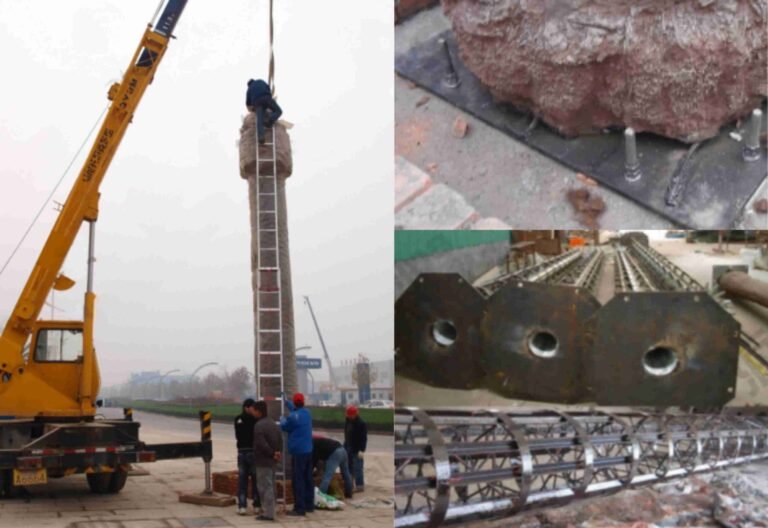
In my years of trading CNC and mold equipment, I saw many people try to save money by cutting corners on the “unseen” parts. In the artificial tree world, the foundation is the unseen part. If you buy a 6-meter tree and a 10-meter tree, you cannot use the same base. Our PDF drawings show a clear progression. For a small base, we use a 400x400mm steel plate with 4 holes. But when the tree grows larger, we move to a 700x700mm plate with 8 holes. This is not just about more bolts. It is about distributing the “torque” or the turning force caused by the wind.
If you design a heavy stand for a monitor, you calculate the tipping point. We do the same. We look at the concrete volume. For a 600mm base plate, we require a foundation that is 1500mm wide and 1380mm deep. That is a massive amount of C25 and C30 reinforced concrete. We don’t just guess. We use these standards to make sure the tree stays upright during a storm. This level of detail is what separates a professional supplier from a simple trader. We give you the blueprint for success before we even ship the tree.
Comparison of Foundation Standards
| Base Plate Size | Concrete Base Width | Total Depth | Anchor Bolt Specs | Concrete Grade |
|---|---|---|---|---|
| 400x400mm | 1000mm | 880mm | 4x Ø22 Hook Screws | C25 / C30 Mix |
| 500x500mm | 1000mm | 480mm | 4x Ø22 Hook Screws | C30 Reinforced |
| 600x600mm | 1500mm | 1380mm | 8x Ø22 Hook Screws | C25 / C30 Mix |
| 700x700mm | 1300mm | 800mm | 8x Ø22 Hook Screws | C25 Reinforced |
Material Integrity: The Science of C30 Concrete and Rebar Reinforcement?
Do you know what is actually inside your concrete base? Without the right rebar mesh, concrete is just hard mud. It will crack under the pressure of a swaying tree.
Our engineering specs require Ø12 two-way rebar meshes with 200mm spacing and Ø22 hook screws to create a high-tensile “skeleton” inside the concrete. This combination handles both the compressive weight of the trunk and the tensile stress from wind-induced swaying.
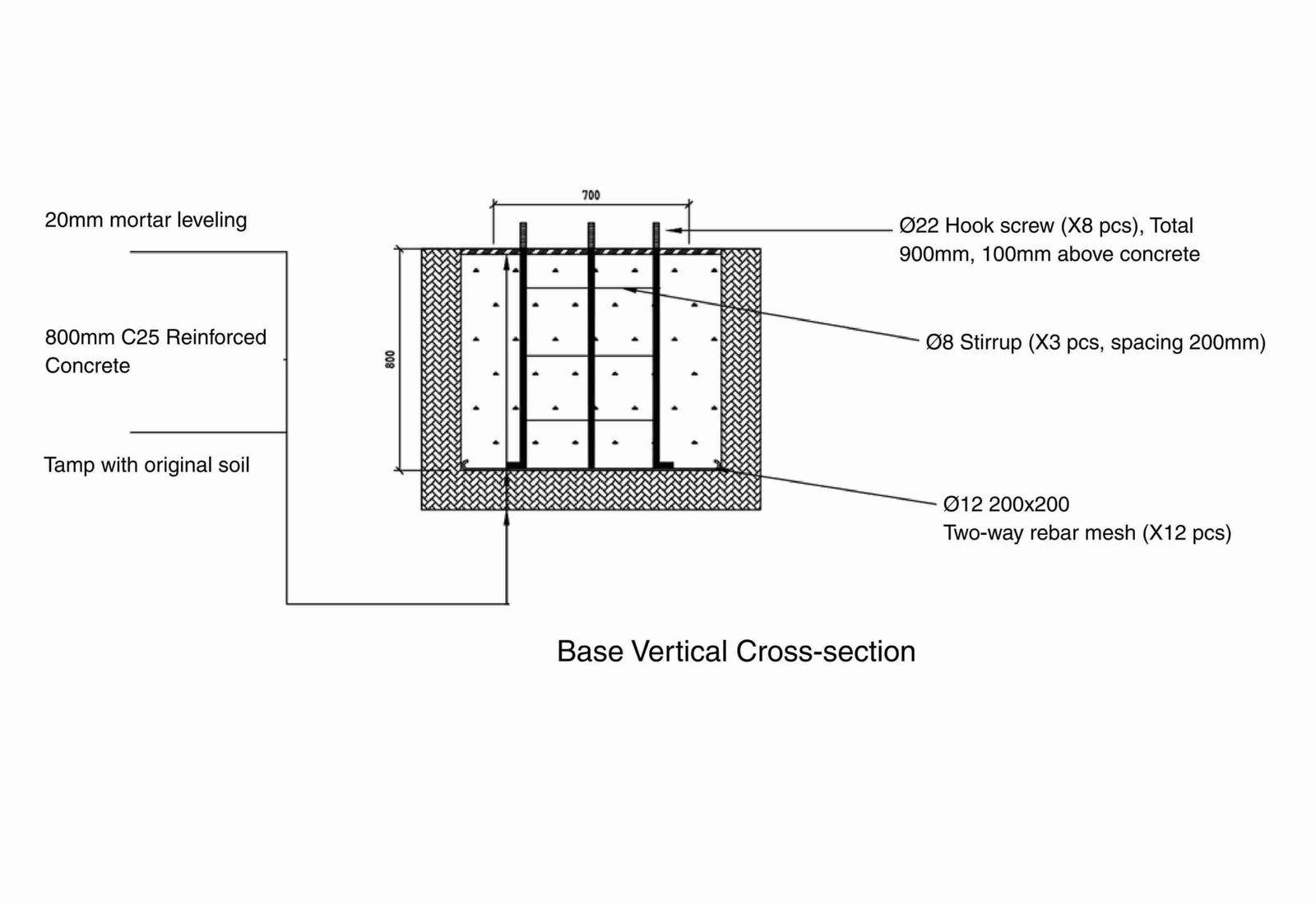
When I was in the factory, we used high-grade steel for the mold plates because cheap steel deforms under high injection pressure. Concrete has the same problem. It is great at being squashed (compression) but terrible at being pulled (tension). When the wind blows against a giant artificial olive tree, one side of the foundation is being pulled up. This is where the rebar mesh comes in. We specify a Ø12 two-way rebar mesh. This mesh acts like the fibers in a composite material. It holds the concrete together when the tree tries to tilt.
We also focus on the anchor bolts. We don’t use simple straight bolts. We use Ø22 “Hook Screws”. The hook at the bottom locks into the concrete. For our 600mm base, these hooks are 1500mm long. They go deep into the C30 reinforced concrete. I tell my clients that this is the most important “insurance policy” they can buy. If you use a thin Ø12 bolt, it might snap in a typhoon. But a Ø22 hook screw is built for heavy industry. This is how we master molding right. We apply the same safety factors to our landscape engineering that we apply to high-pressure plastic molds. Jacky understands that a 10% safety margin is not enough. We aim for 300% safety.
Technical Material Specifications
| Component | Specification | Function | Mold Industry Equivalent |
|---|---|---|---|
| Reinforcing Bar | Ø12 Steel Mesh | Provides tensile strength to prevent cracking. | Internal support pillars in large molds. |
| Anchor Bolts | Ø22 Hook Screws | Mates the steel trunk to the concrete foundation. | High-tensile mold assembly bolts. |
| Concrete Grade | C25 / C30 Reinforced | Provides the mass and compression strength. | Hardened tool steel (H13) for the core. |
| Stirrups | Ø8 at 160mm-200mm spacing | Holds the vertical rebar in place during pouring. | Alignment pins and bushings. |
Precision Installation: The Art of Leveling and Soil Compaction?
Is your installation site actually ready for a 5-ton tree? If the soil is soft or the surface is uneven, your tree will lean like the Tower of Pisa.
Professional installation requires tamping with original soil followed by a 20mm mortar leveling layer to ensure the steel base plate sits perfectly flat against the concrete foundation. This eliminates gaps that could lead to vibration, bolt loosening, or structural failure over time.
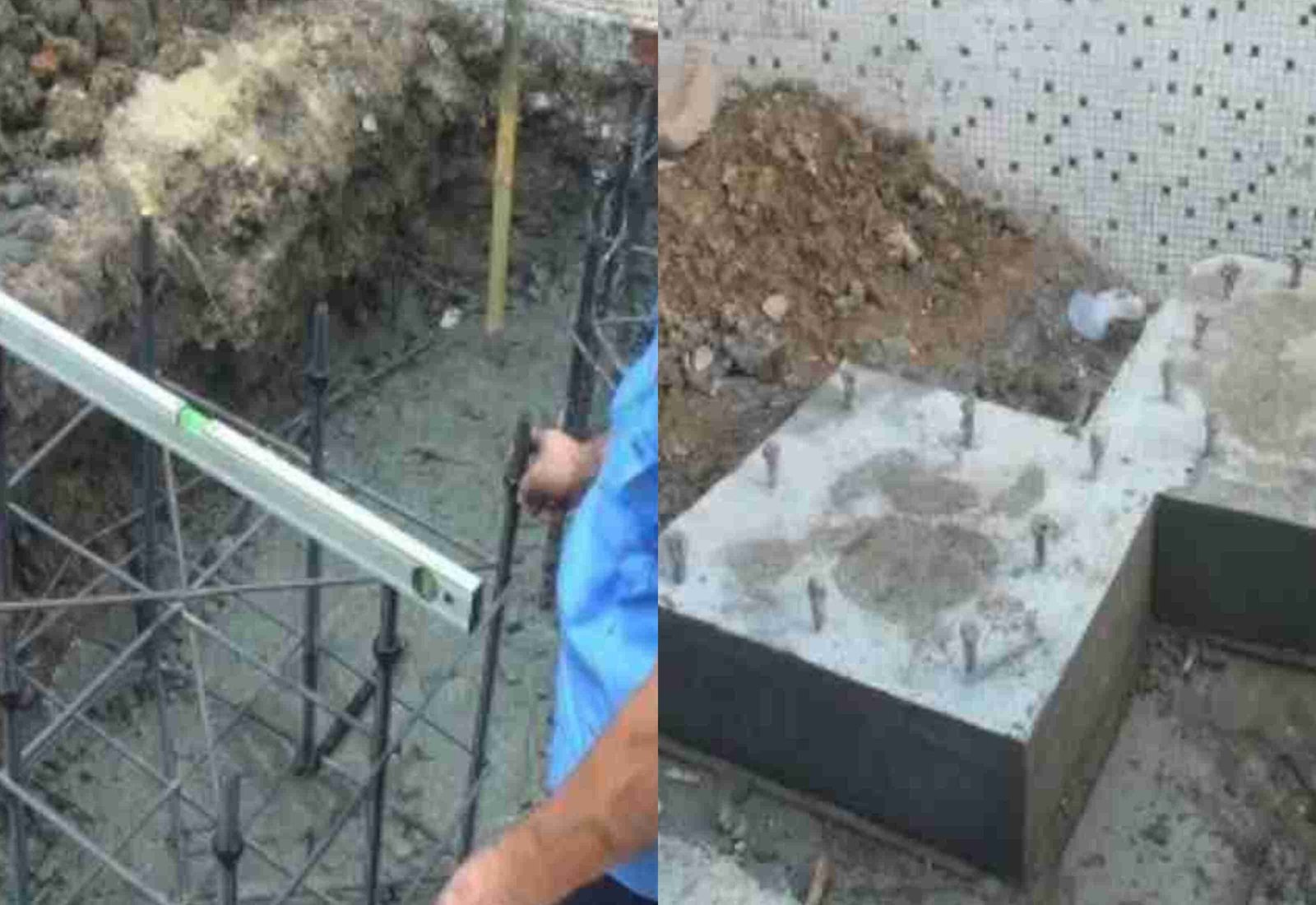
The final step is the most critical for precision. In mold making, if your plates are not perfectly flat, you get “flash” or leaking plastic. In tree installation, if your base is not level, you get “stress.” Our drawings always include a “20mm mortar leveling” step. This is not a suggestion. It is a requirement. Concrete is never perfectly flat when it dries. The mortar allows us to create a perfect “mating surface” for the steel plate on the trunk.
Before you even pour the concrete, you must “tamp with original soil”. If the ground under the concrete is soft, the whole 580mm or 800mm concrete block will sink. My journey in the mold industry taught me that the environment around the machine is just as important as the machine itself. You need a solid floor for a 500-ton injection press. You need solid ground for a 10-meter olive tree. We provide the “Rebar Distribution Diagram” so your local contractor knows exactly where to place every piece of steel. We make it so clear that even a beginner can succeed. This is our mission at MoldAll: making complex engineering accessible to everyone. We help you get the foundation right so the beauty on top lasts forever.
Installation Checklist for Success
| Step | Action Required | Technical Goal | Risk of Failure |
|---|---|---|---|
| 1. Soil Prep | Tamp with original soil. | Create a stable sub-base. | Foundation sinking or tilting. |
| 2. Rebar Mesh | Place Ø12 mesh with spacers. | Suspend steel for full concrete coverage. | Rusting rebar and weak concrete. |
| 3. Bolt Setting | Secure Ø22 hooks with 100mm above concrete. | Ensure enough thread for the base plate. | Bolts too short to tighten properly. |
| 4. Leveling | Apply 20mm mortar leveling layer. | Achieve a perfectly flat mounting surface. | Stress on bolts and trunk vibration. |
Conclusion
A majestic artificial tree is only as good as the foundation beneath it; mastering the engineering of rebar, concrete, and leveling is the only way to ensure safety and bespoke quality. For more detailed mold shrinkage calculations, visit our Technical Guide.