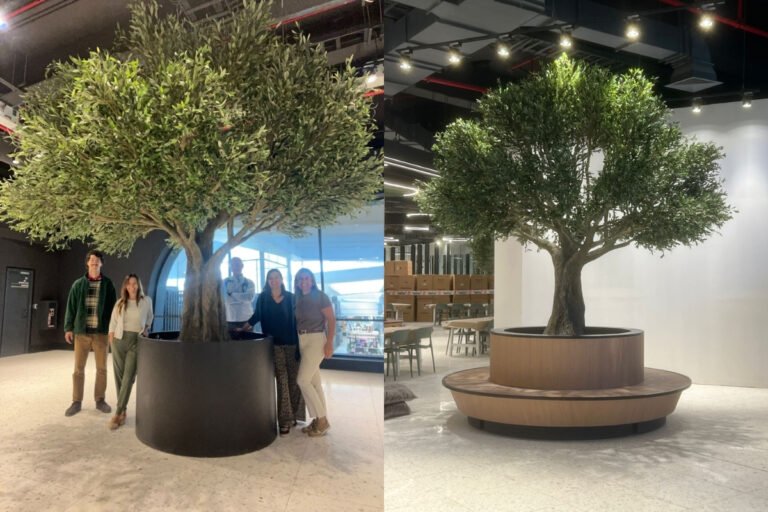
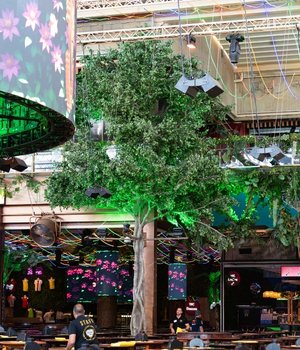
A beautiful artificial tree can improve a commercial space fast.Choosing a fire resistant option is important, because if fire safety is ignored, that same decoration can become a serious risk for people, property, and business operations.
What Does Fire Resistant Mean?
Many buyers see the term fire resistant, but not everyone understands what it means in a commercial artificial tree project.
Fire resistant means a material is designed to slow ignition and reduce flame spread. In commercial artificial tree projects, this matters because these products are used in public spaces where safety and risk control are important.
Two Technologies
- CFR (Coated Fire Retardant): Surface Application by Spraying or Dipping.
- IFR (Inherently Fire Retardant): FR Additives are included in the manufacturing process.
What Is the Difference Between Fire-Retardant and Non-Fire-Retardant Artificial Tree Leaves?
Many buyers can see the color, shape, and texture of artificial leaves. Few can immediately see the safety difference. In commercial work, this hidden difference can matter a lot.
The main difference is that fire resistant artificial tree leaves are made or treated to reduce flame spread, while non-fire resistant leaves can ignite more easily and may contribute to faster fire growth in a commercial setting.
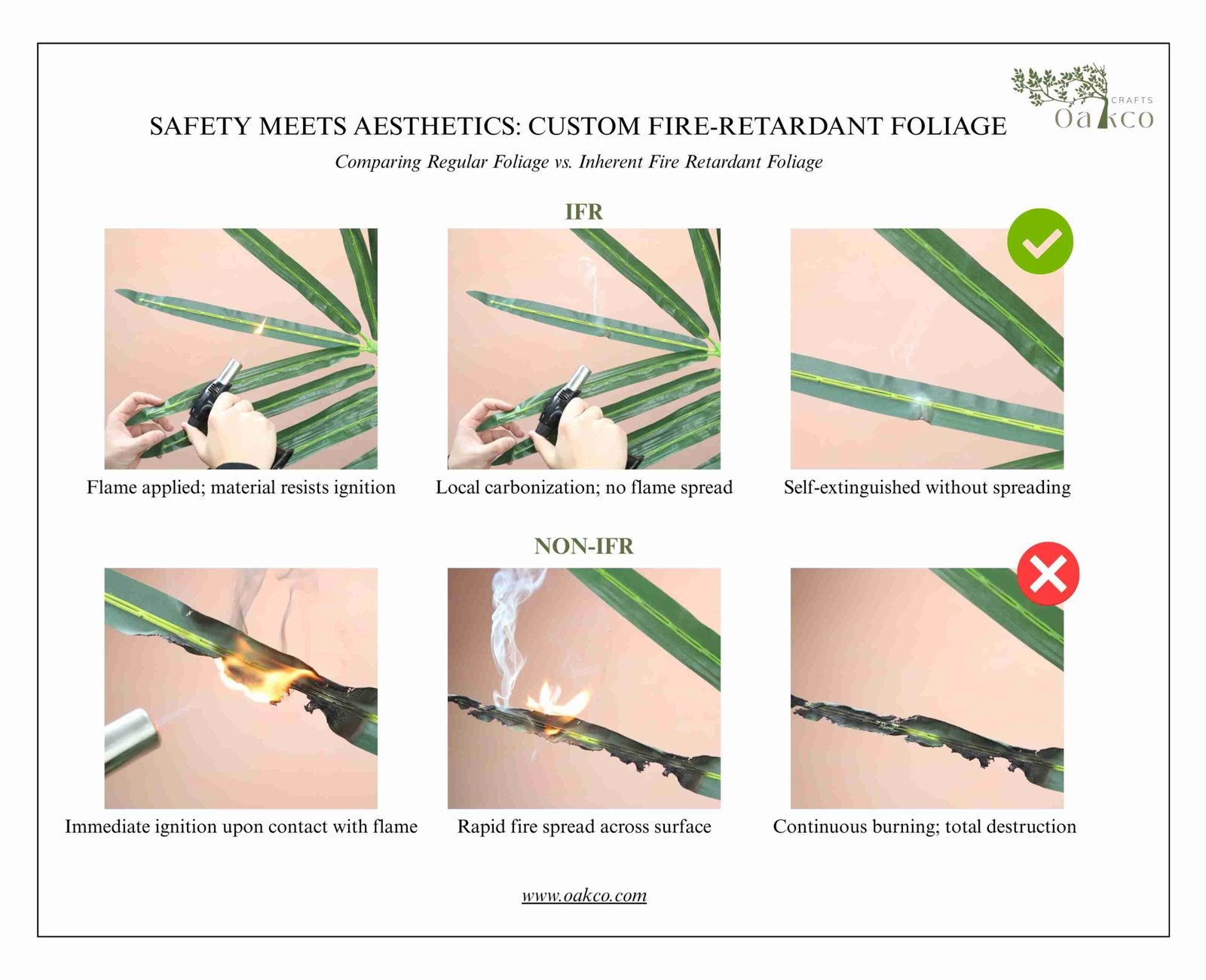
The visual difference is often small
This is one of the biggest problems in the market. A fire-retardant leaf and a non-fire-retardant leaf may look very similar in a photo. Even in person, the difference is not always easy to spot. A buyer may assume that a realistic product is also safe enough for commercial use. That is not a safe assumption.
I always remind buyers that appearance does not prove performance. A lifelike finish, printed veining, and natural color gradients do not tell me anything about fire behavior. I need more than looks.
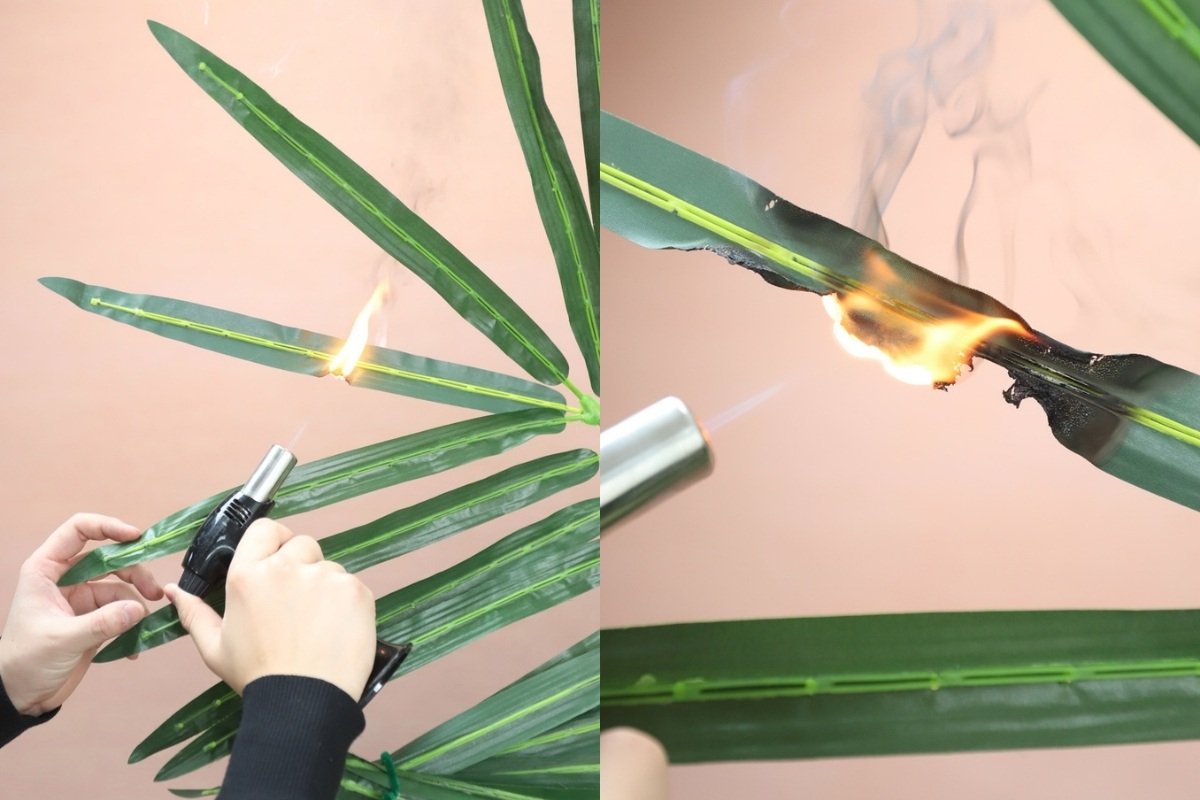
The material behavior is the real difference
The real difference appears when the material is exposed to heat or flame. Fire Resistant leaves are designed to slow ignition or reduce flame spread. Non-Fire Resistant leaves usually do not offer that level of control. In a commercial space, that difference is important.
Here is a simple comparison:
| Feature | Fire Resistant Leaves | Non-Fire Resistant Leaves |
|---|---|---|
| Flame spread | Slower or reduced | Faster and less controlled |
| Project suitability | Better for commercial use | Higher risk in public spaces |
| Compliance support | May include test documents | Often lacks formal support |
| Buyer confidence | Higher | Lower |
| Long-term project value | Stronger | Weaker |
I think this is where many projects either become smooth or become risky. If the buyer understands the real difference between fire-retardant and non-fire-retardant leaves, the decision becomes more professional. It also becomes easier to align design goals with safety goals.
What Should Buyers Check When Choosing Artificial Trees for Commercial Spaces?
A good-looking artificial tree is not enough for a commercial project. Buyers need to check the product as a full project item, not as a simple decorative object.
Buyers should check fire-retardant performance, material details, supporting documents, usage environment, maintenance needs, and supplier transparency before choosing artificial trees for commercial spaces.
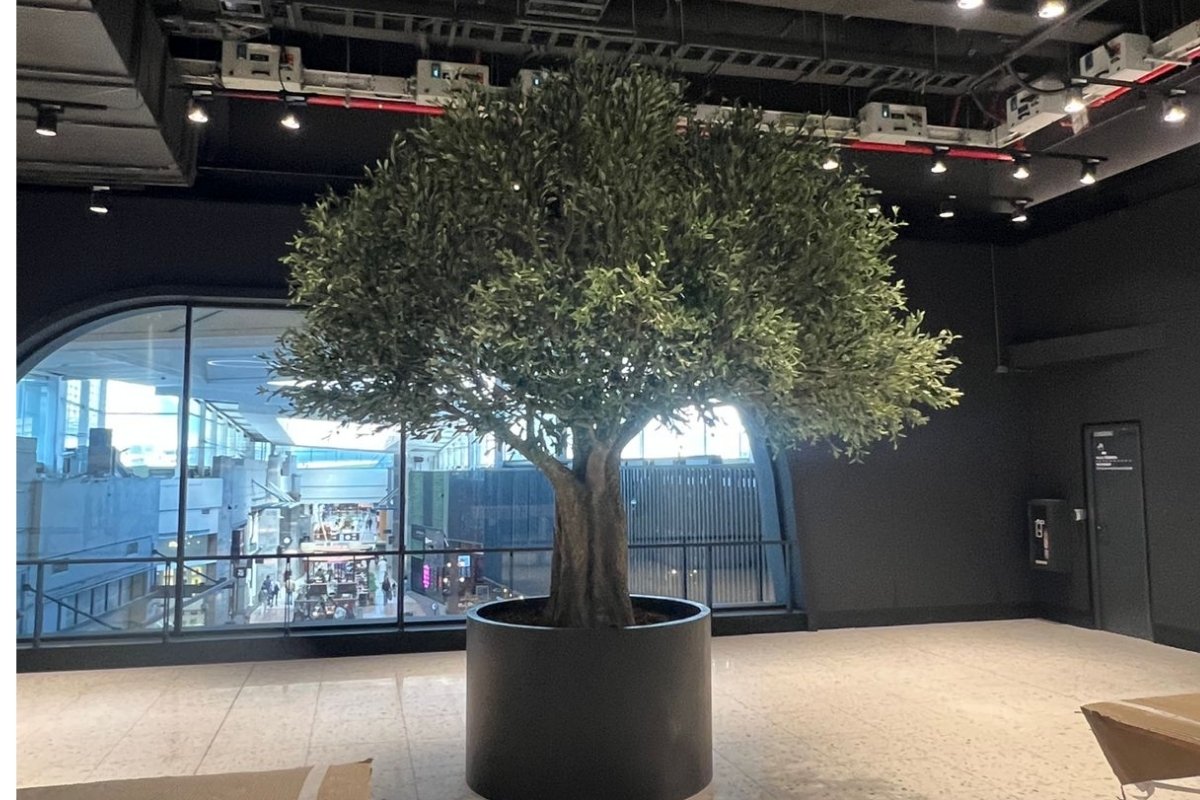
Start with the project environment
I always start with one simple question: where will this tree be used? The answer affects almost everything. A hotel lobby, office reception, shopping mall, restaurant, airport, showroom, and event venue do not all have the same requirements.
The buyer should first define the real environment:
| Check Point | Why I Think It Matters |
|---|---|
| Indoor or semi-open area | Exposure conditions may differ |
| Public traffic level | More people means more responsibility |
| Nearby heat or electrical sources | Risk level may increase |
| Project approval process | Documents may be required |
| Long-term or temporary use | Material strategy may change |
Without this step, buyers often compare products only by image and price. That is not enough for commercial work.
Conclusion
I believe fire safety is not a side issue in commercial artificial tree projects. Choosing fire resistant artificial trees is part of responsible buying, safer design, and better long-term project decisions.