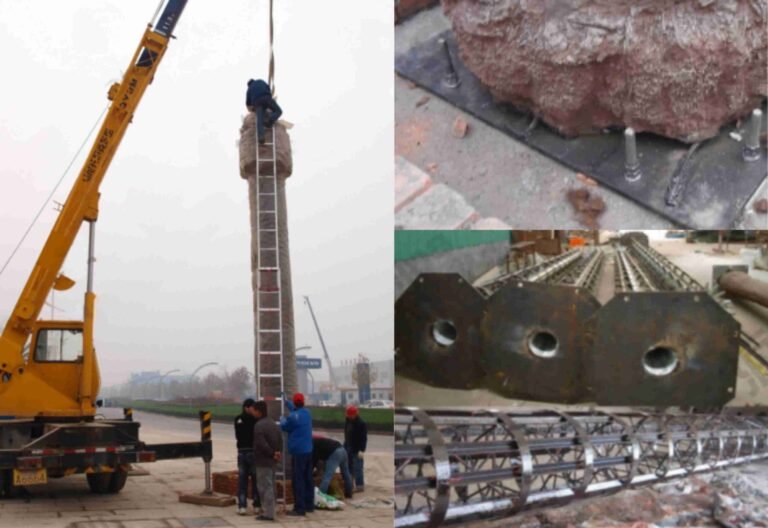
Preserved Palm Tree vs Artificial Palm Tree is a key question for many commercial buyers who want the right balance between natural look, project fit, and long-term value.
For most commercial projects, I find that artificial palm trees are more flexible, more durable, and easier to control. Preserved palm trees can look natural, but they fit a narrower range of interior uses and often need more careful planning.
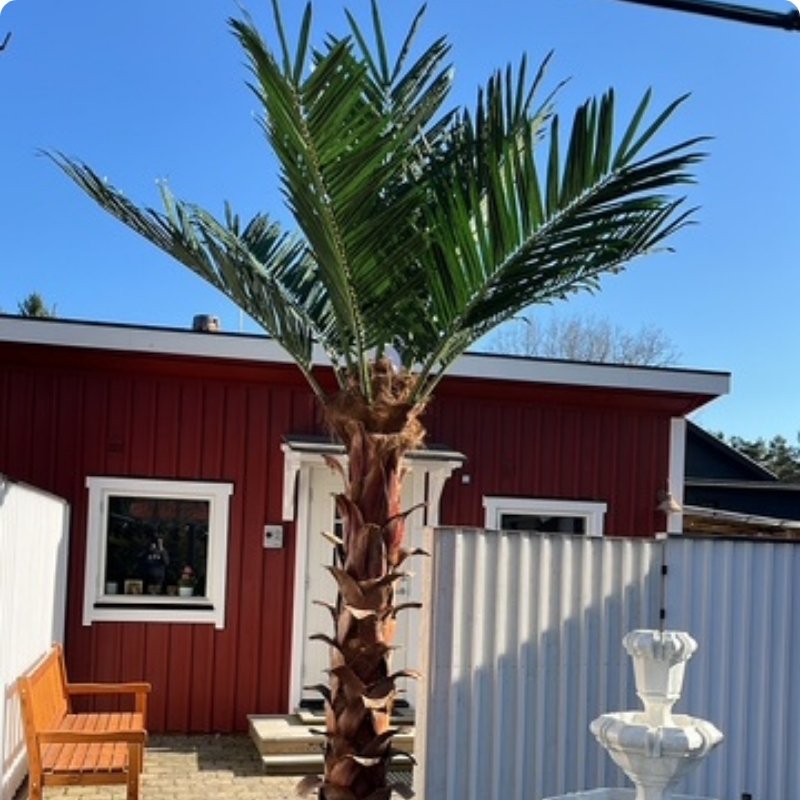
When I talk with clients, I notice that they usually do not ask only about looks. They also ask about lifespan, maintenance, transport, budget, and project fit. That is why I do not see this as a simple style choice. I see it as a project decision.
What Is the Difference Between a Preserved Palm Tree and an Artificial Palm Tree?
Many clients see both options as decorative palm trees. Then they find out that the material and performance are very different.
I explain it this way: a preserved palm tree uses real natural plant parts that have been treated, while an artificial palm tree is made from man-made materials designed to copy the look of a real palm.
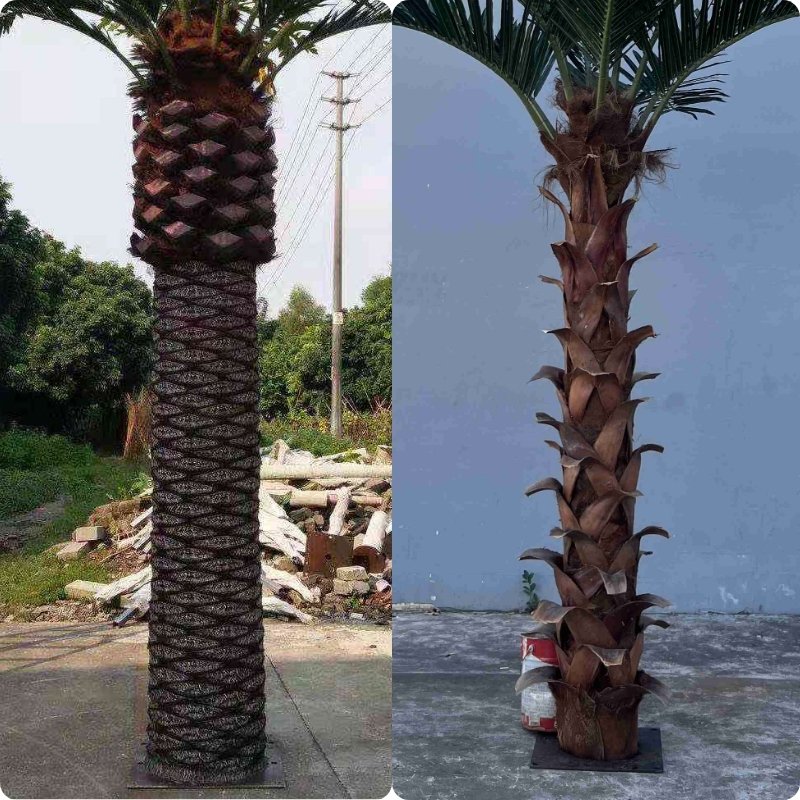
What each product is made of
When I compare these two products with clients, I start with the most basic point. A preserved palm tree still comes from real plant material. The leaves or trunk parts are natural, but they go through a treatment process to keep their shape and color for longer. An artificial palm tree is different from the start. It is built with materials like plastic, fabric, foam, metal, fiberglass, and real wood trunks in some models. It is not real plant tissue, even if it looks very close to nature.
This difference affects almost everything after that. It affects touch, color stability, storage, maintenance, and project use. A preserved palm tree often gives people a more direct natural feeling because the plant material is real. Still, that same natural base can also make it more sensitive to humidity, direct handling, and long-term environmental changes. An artificial palm tree does not have the same natural tissue, but it gives me more control in production. I can adjust height, leaf density, trunk structure, fire rating options, and packing method more easily.
Why the difference matters in real projects
In my experience, many buyers first focus on the word “natural.” That makes preserved products sound better at first glance. But I always ask one more question: where will the tree be used, and for how long? A product can sound natural and still fail a project requirement.
| Point | Preserved Palm Tree | Artificial Palm Tree |
|---|---|---|
| Base material | Real treated plant material | Man-made decorative materials |
| Visual feel | Natural texture | Controlled realistic look |
| Structure control | More limited | Highly customizable |
| Long-term handling | More sensitive | More stable |
| Project flexibility | Narrower | Wider |
I have seen cases where a client wanted the most natural look possible, but the project needed repeated transport, custom height, and easy replacement. In that case, artificial was the better answer. I have also seen boutique interior spaces where preserved material worked as a special feature because the environment was stable and the design concept was very soft and organic. So the difference is not only technical. It changes the whole project decision.
Which Option Looks More Natural in Commercial Interior Projects?
Most clients care about the visual result first. They want guests, shoppers, or visitors to feel that the space is warm, premium, and believable.
In close viewing, preserved palm parts can feel more naturally textured. In full project presentation, I often find that a high-quality artificial palm tree gives a more complete and consistent natural look.
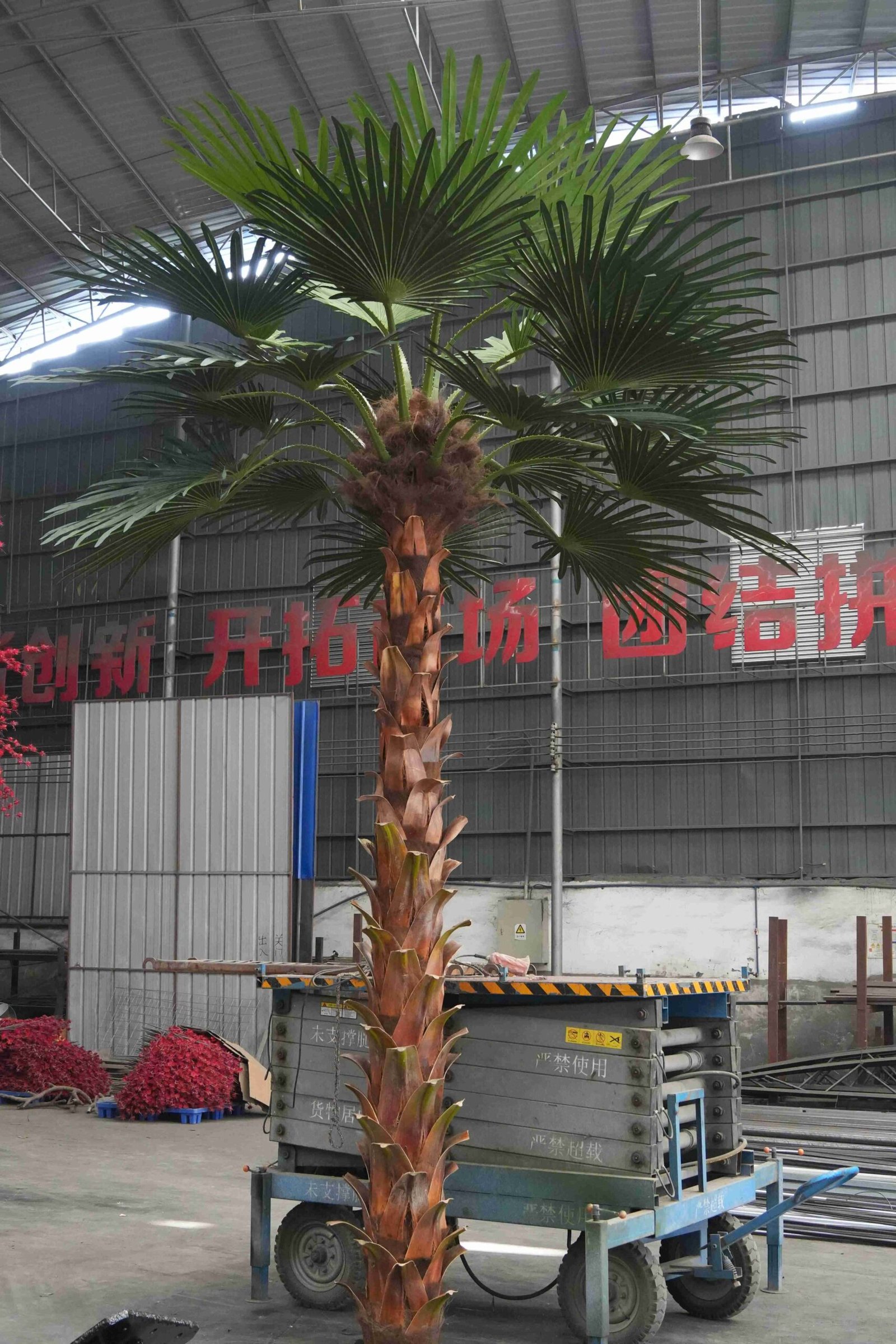
Natural look is not only about material
I think many people judge “natural” in the wrong way. They only ask whether the leaf itself is real.But I do not stop there.Instead, I look at the whole tree in the whole space. Leaf shape, color consistency, canopy proportion, trunk detail, branch transition, pot finish, and lighting all affect the final result. A palm tree can use real preserved material and still look weak in a commercial setting if the shape is not full enough or the structure does not fit the room scale.
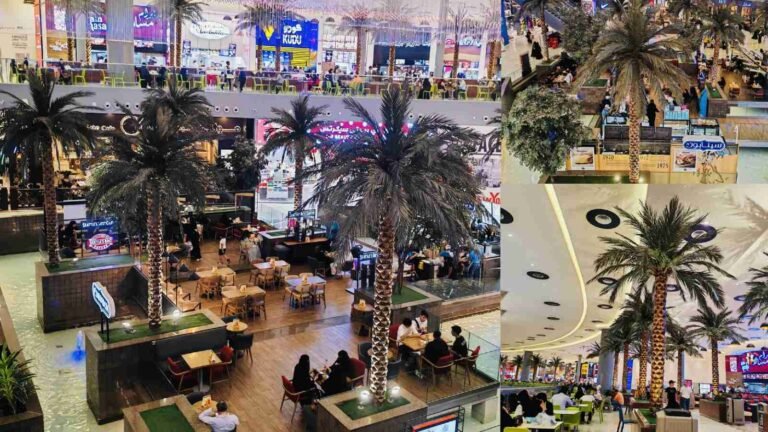
That is why I often say that project realism is different from material realism. Material realism is about what the leaf is. Project realism is about what people see from normal distance in a lobby, restaurant, mall, office, or hotel. In many big interiors, a well-made artificial palm tree actually performs better because the overall form is stronger and more controlled. The tree keeps a clean silhouette. The crown looks balanced. The trunk can be built to suit ceiling height. The leaf color can be matched across multiple units.
Why consistency matters in commercial spaces
Commercial interior projects are rarely about one single decorative tree. Most of the time, clients need several trees or a repeated visual language across the space. That is where consistency becomes very important. Preserved products can vary more because they come from natural materials. Some variation is beautiful. Too much variation can become a problem in a polished commercial project.
| Visual factor | Preserved Palm Tree | Artificial Palm Tree |
|---|---|---|
| Leaf texture | Very natural up close | Very realistic in premium grades |
| Shape consistency | Less predictable | More consistent |
| Size matching | Harder to standardize | Easier to standardize |
| Large-scale visual effect | Can be uneven | Stronger control |
| Design customization | Limited | Easier |
I remember one interior concept where the designer wanted a clean tropical look with several matching palm trees near a seating area. In that kind of project, I would choose artificial almost every time. I can keep the set visually unified. I can also match the trees to the furniture scale and walking path. So when clients ask me which one looks more natural, I answer carefully. If they mean close material feeling, preserved may win. If they mean the final visual result in a commercial interior, high-quality artificial often wins.
Which Palm Tree Option Is Better for Different Project Types?
A palm tree that works in one project may be the wrong choice in another. I always match the product to the project, not the other way around.
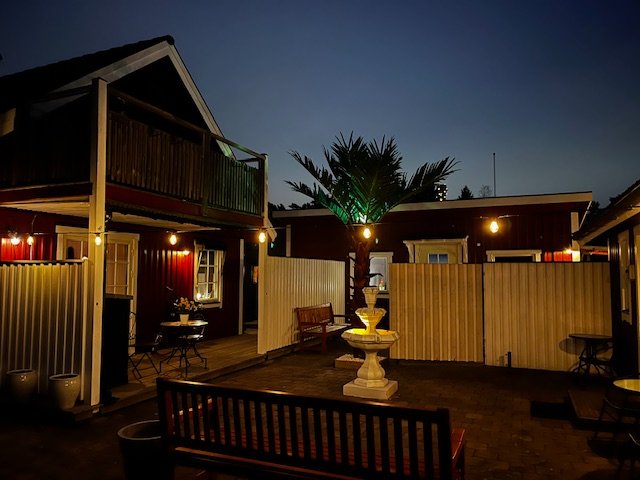
I usually recommend artificial palm trees for most commercial, hospitality, and long-term interior projects. I see preserved palm trees as a niche option for stable indoor spaces with a strong natural design focus.
Project type changes the answer
I do not like one-size-fits-all advice. A luxury showroom, a resort lobby, a retail display, and a themed restaurant all have different needs. Some projects need a statement piece. Some need many repeated units. Some need easy cleaning. Some need custom fire-safe materials. Some need easy shipping to another country. Once I map these conditions, the better option becomes clearer.
For long-term B2B projects, artificial palm trees usually give me more confidence. They are easier to customize in height and canopy spread. They are easier to pack and install. They are easier to maintain. They can also support project needs like UV materials for some semi-outdoor uses or flame-retardant options for indoor commercial settings, depending on the specification. Preserved palm trees do not usually give me the same level of flexibility.
Matching the tree to the real use case
I find it helpful to break project types into groups. This makes the decision easier for clients and specifiers.
| Project type | Better option | Reason |
|---|---|---|
| Hotel lobby | Artificial | Stable structure, custom size, repeated use |
| Retail display | Artificial | Easy visual control and replacement |
| Office interior | Artificial | Low maintenance and long-term consistency |
| Boutique concept corner | Preserved or Artificial | Depends on design style and traffic |
| Event or short-term styling | Artificial | Easier transport and reuse |
| Soft organic interior accent | Preserved | Good for special natural mood in stable conditions |
There are also practical issues behind the design story. Large commercial projects often involve shipping, customs, installation teams, safety checks, and client revisions. Artificial palm trees fit those steps better. I can adjust details before production. I can send drawings and material references. I can produce matching sets. I can rebuild a damaged part more easily. Preserved products are more limited in that system.
So when a client asks me which option is better for different project types, my answer is direct. If the project is large, commercial, custom, repeated, or long-term, I lean toward artificial. If the project is small, indoor, design-led, and does not need high structural control, preserved may still have a place.
How to Choose the Right Palm Tree for Your Project?
Many buyers compare products first. I prefer to compare project needs first. That is how I avoid expensive mistakes.
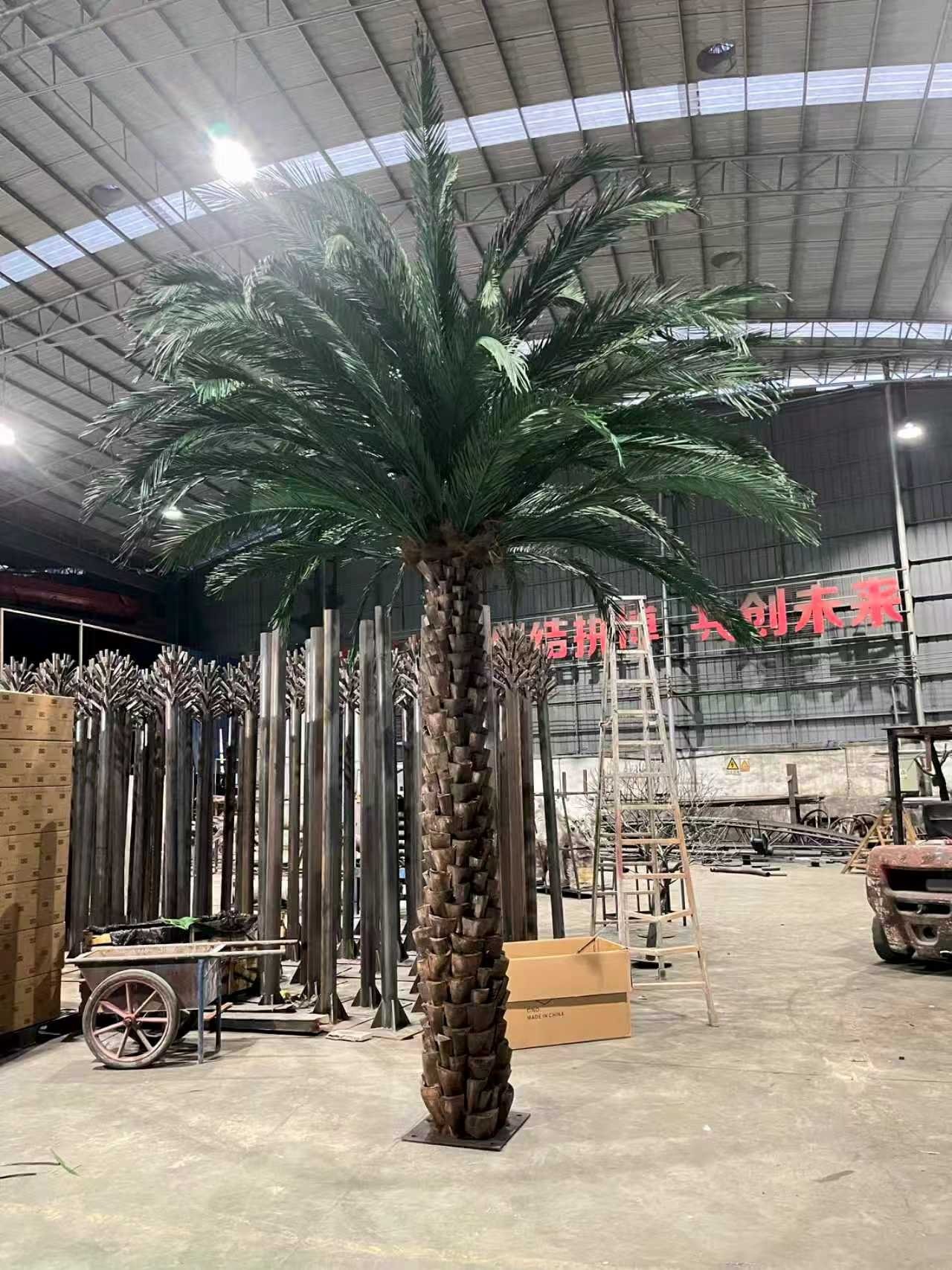
I choose the right palm tree by checking five things first: project location, visual goal, maintenance level, customization needs, and lifespan expectations. In most B2B cases, these points lead me to an artificial solution.
The questions I ask before I recommend anything
When I help a client choose a palm tree, I do not begin with catalog pages. I begin with questions. Is the project indoor only? Is the air-conditioned environment stable? Will people touch the tree often? Does the client need one piece or twenty pieces? Does the design team need a custom height? Does the buyer care more about close-up texture or long-term project performance?
These questions help me separate emotional preference from practical need. Some clients say they want the most natural option. After a few questions, I find that what they really want is a premium look with low maintenance and consistent quality. That often points back to artificial palm trees. Other clients want a softer design story for a small and protected interior corner. Then preserved may be worth considering.
A simple selection framework
I use a basic framework that keeps the process clear. It helps me make a recommendation fast, and it also helps the client understand why that choice makes sense.
| Selection factor | If your answer is this | Better option |
|---|---|---|
| Need custom size or shape | Yes | Artificial |
| Need many matching units | Yes | Artificial |
| Need low maintenance | Yes | Artificial |
| Want natural plant tissue | Yes | Preserved |
| Space is stable and low traffic | Yes | Preserved can work |
| Project is long-term commercial use | Yes | Artificial |
I also think about the brand image of the space. A project tree is not only decoration. It supports the mood of the environment. In a hotel or showroom, the tree needs to look good every day, not only on installation day. In that sense, reliability matters as much as beauty. I have learned that a very realistic artificial palm tree often gives the best balance of look, control, and business value.
I would tell clients to avoid choosing only by first impression. A project is bigger than a sample leaf. It includes delivery, installation, daily use, and long-term appearance. When I look at the full picture, I can make a smarter choice. In most cases, that choice is artificial. In selected design-focused interiors, preserved can still be a strong accent option.
Conclusion
I see preserved palm trees as a niche interior choice, but for most commercial projects, artificial palm trees give a better balance of realism, control, and long-term value.