Large artificial olive tree delivered projects often fail in the same places. Buyers worry about wrong sizes, shipping damage, late delivery, and hard site installation. I understand these concerns because I work with them on real projects.
I turn project ideas into a clear delivery process. I confirm the design, plan production, control packing, check quality, track progress, and support the project until the trees arrive and are installed on site.
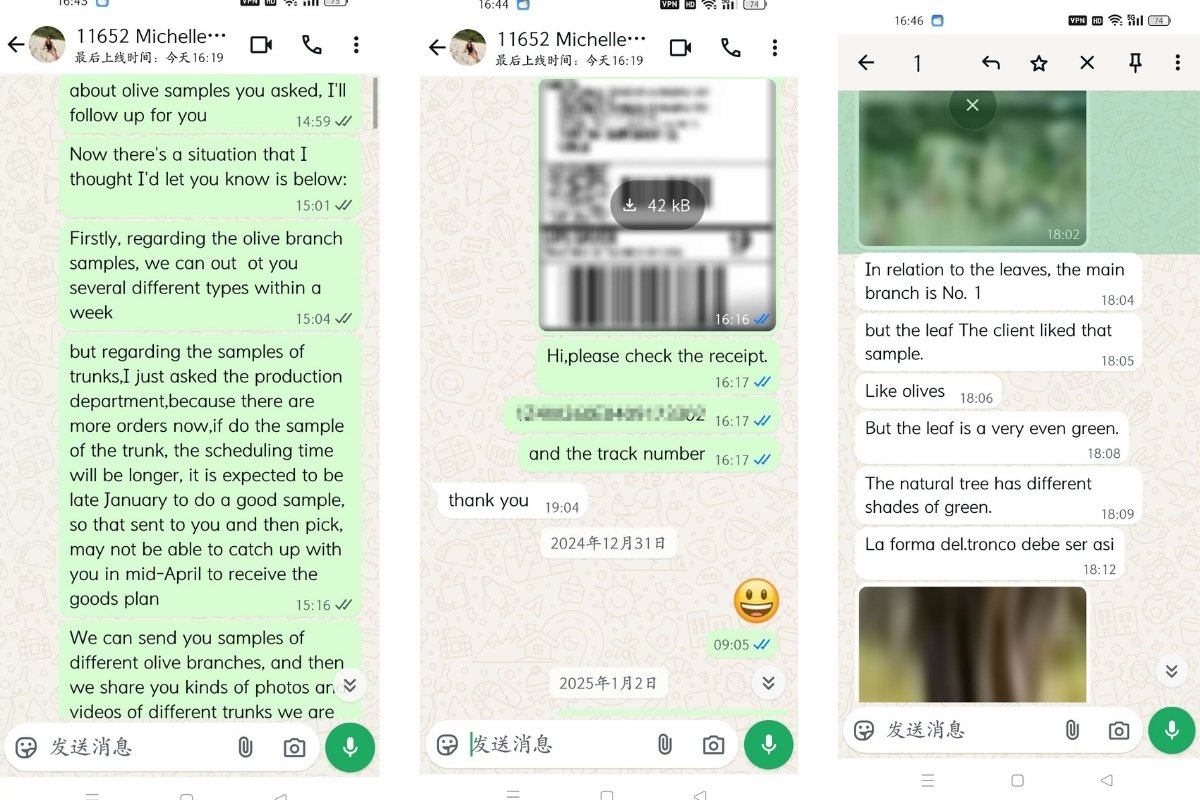
When I talk with clients, I find that most of them do not only want a good-looking tree. They want a smooth project. They want fewer mistakes, less risk, and better control. That is why I like to explain the full path from production to site. When clients see the process, they feel more confident about the result.
How Do We Turn Project Requirements into a Practical Production Plan?
Many project problems start before production starts. A buyer may have a concept image, a rough size, or only a space plan. If I do not turn that information into a real production plan, the final tree can easily miss the project target.Artificial Olive Tree Delivery starts with a practical production plan.
I turn project requirements into a practical production plan by checking the size, shape, style, materials, structure, and site conditions before production starts. I do not treat a tree as a simple product. I treat it as a project item that must fit the real space.
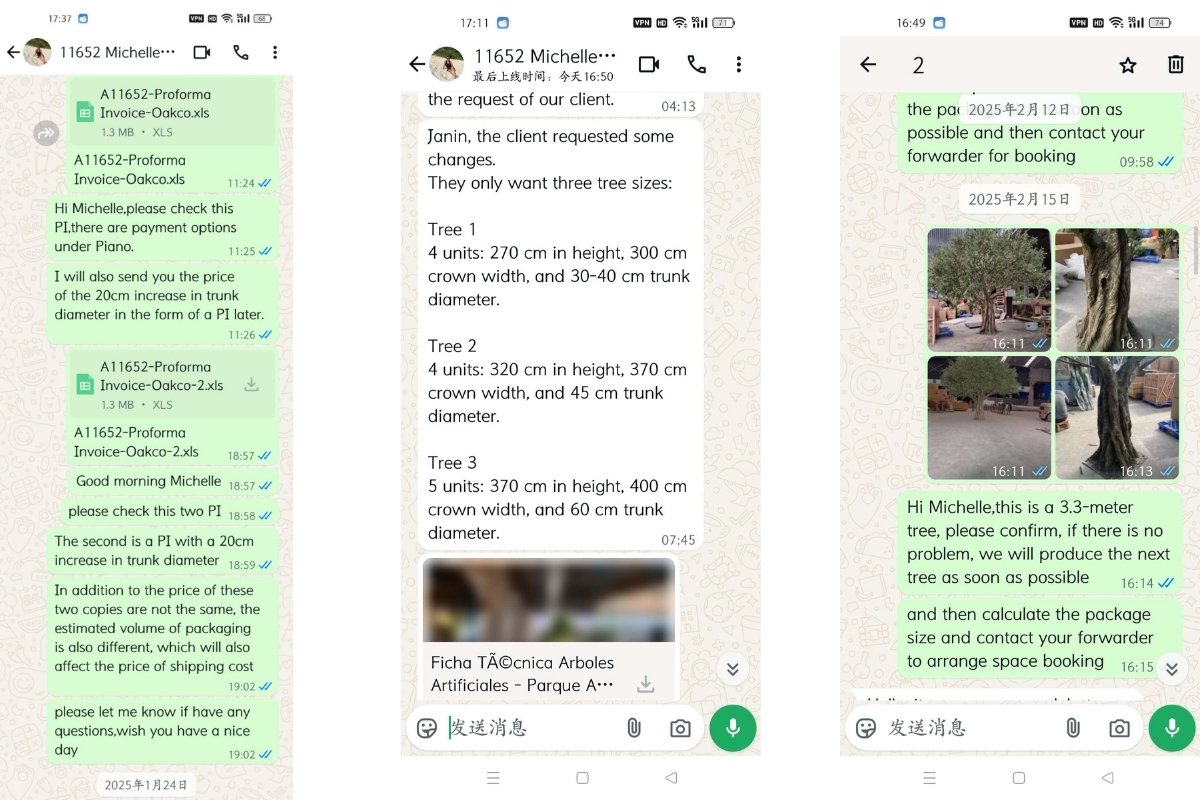
Why early planning matters
When I start a large artificial olive tree project, I first look at what the client is really trying to achieve. Some clients care most about visual impact. Some care most about fire safety. Some need the tree to pass through a narrow entrance. Some want fast installation because the site schedule is tight. If I only focus on the look of the tree, I may miss the real project need.
That is why I always break the request into practical points. I confirm height, canopy width, trunk style, leaf density, color tone, base method, and delivery method. I also ask how the tree will be used. Is it for a hotel lobby, mall, restaurant, showroom, or event space? Each space creates different needs. A permanent commercial project usually needs stronger structure and more careful packing. A short-term event project may need faster assembly and easier replacement.
What I define before production
I like to turn abstract ideas into visible and measurable points. This reduces confusion between the client, the design team, and the production team.
| Planning item | What I check | Why it matters |
|---|---|---|
| Tree size | Height, canopy spread, trunk thickness | Keeps the tree in scale with the site |
| Visual style | Species, leaf color, branch rhythm, trunk texture | Makes the tree match the design intent |
| Structure | Detachable parts, steel core, base plate | Supports shipping and installation |
| Site limits | Door width, lift size, ceiling height, load limits | Prevents site access problems |
| Compliance needs | Fire retardant, UV resistance, special finish | Matches project standards |
| Delivery goal | Shipping method, timing, installation needs | Aligns production with the project schedule |
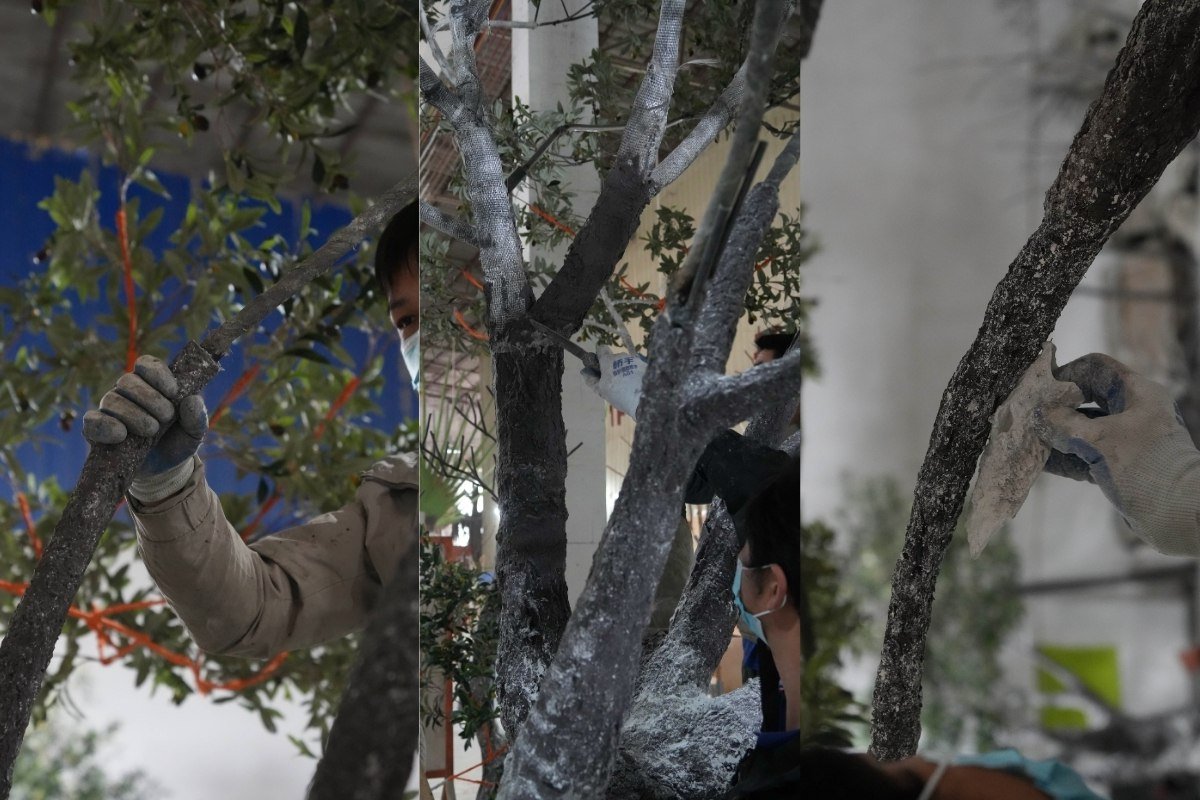
How I reduce risk at this stage
I do not assume that a reference image gives enough information. A beautiful photo can hide many practical issues. The trunk may be too thick for entry. The canopy may be too wide for shipping. The base may not match the floor condition. So I try to identify those risks early. This planning stage saves time later. It also helps clients feel that I understand the whole project, not only the product itself.
How Do We Make Large Artificial Trees Safe for Packing and International Shipping?
Large artificial olive trees look impressive on site, but they are not easy cargo. If the packing is weak, branches bend, leaves crush, trunk surfaces scratch, and base parts move during transit. This is where many suppliers lose trust.Safe packing is a key part of Artificial Olive Tree Delivery for international projects.
I make large artificial olive trees safe for packing and international shipping by designing them for disassembly, protecting key parts, fixing each section securely, and choosing packing methods that reduce damage and shipping waste.
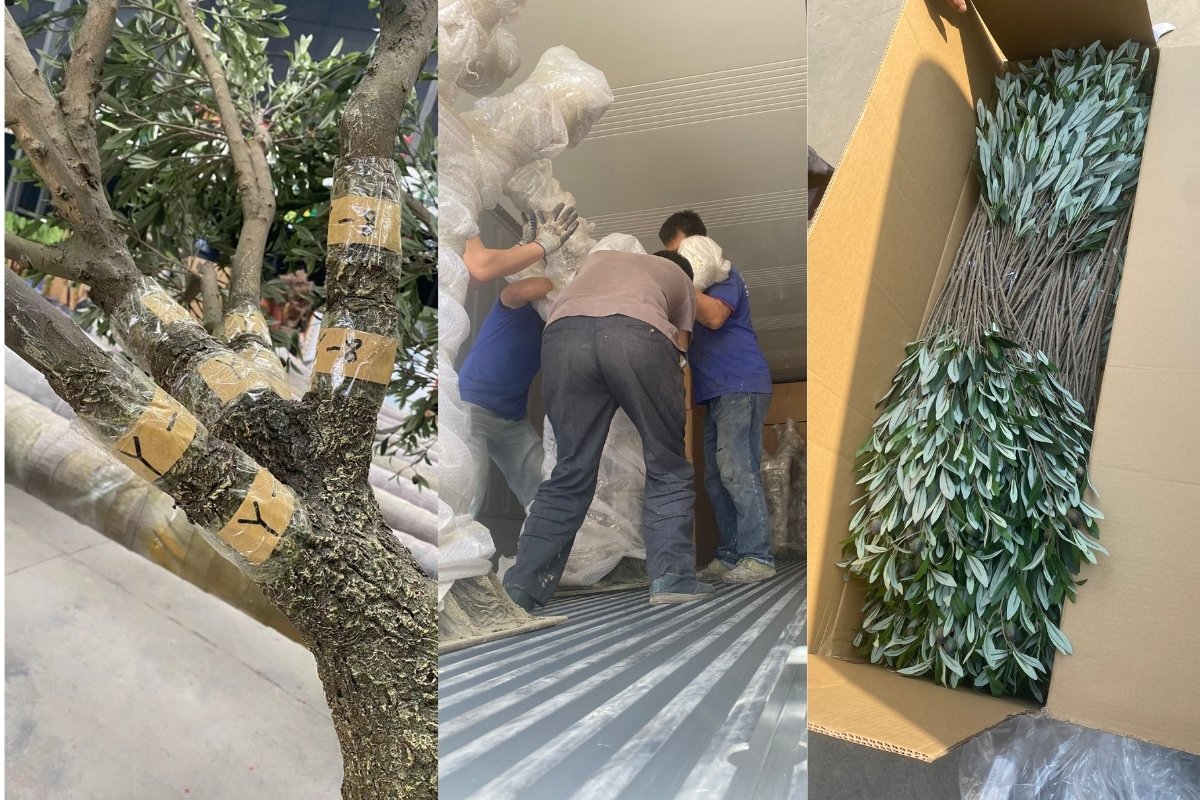
Why packing is part of the product
I always tell clients that packing is not the final step. Packing is part of the project solution. A tree may look perfect in the factory, but if it arrives damaged, the project still fails. So I think about shipping risk as early as I think about design.
For large trees, I often use detachable structures. I separate the trunk, branch system, canopy parts, and base when needed. This lowers package size and makes loading easier. It also reduces freight cost in many cases. More importantly, it helps protect the tree because each part can be packed based on its shape and surface.
How I protect the high-risk areas
Some parts of a large artificial olive tree need more care than others. Painted trunk texture can scratch. Extended branches can deform. Dense leaves can flatten. Bases can shift if they are not fixed well. I identify these high-risk points and protect them one by one.
| Risk area | Common shipping problem | My packing approach |
|---|---|---|
| Trunk surface | Scratches and paint damage | Foam wrap, corner protection, fixed position |
| Branches | Bending and pressure damage | Separate sections, tie control, inner supports |
| Leaves and canopy | Compression and shape loss | Controlled spacing, soft wrapping, outer support |
| Base plate | Movement inside crate | Strong fixing points and wood reinforcement |
| Small connectors | Missing parts | Labeled bags and packing checklist |
How I think about international shipping
International delivery adds more pressure. Cargo is moved many times. Crates may be stacked. Weather and transit time may vary. So I avoid loose packing. I prefer a stable internal structure inside the crate. I also like clear labeling for assembly parts. When the project team opens the package on site, they should understand what each part is and where it goes. Good packing is not only about protection. It is also about making the next step easier.
How Do We Control Quality and Project Progress Before Shipment?
Clients do not only ask me, “Is the tree good?” They also ask, “Is the project still on schedule?” These two questions are always connected. A project can fail because of bad quality. It can also fail because the supplier loses control of timing.
I control quality and project progress before shipment by checking details at key stages, reviewing finished results before packing, and keeping the client informed with clear updates, photos, and videos.
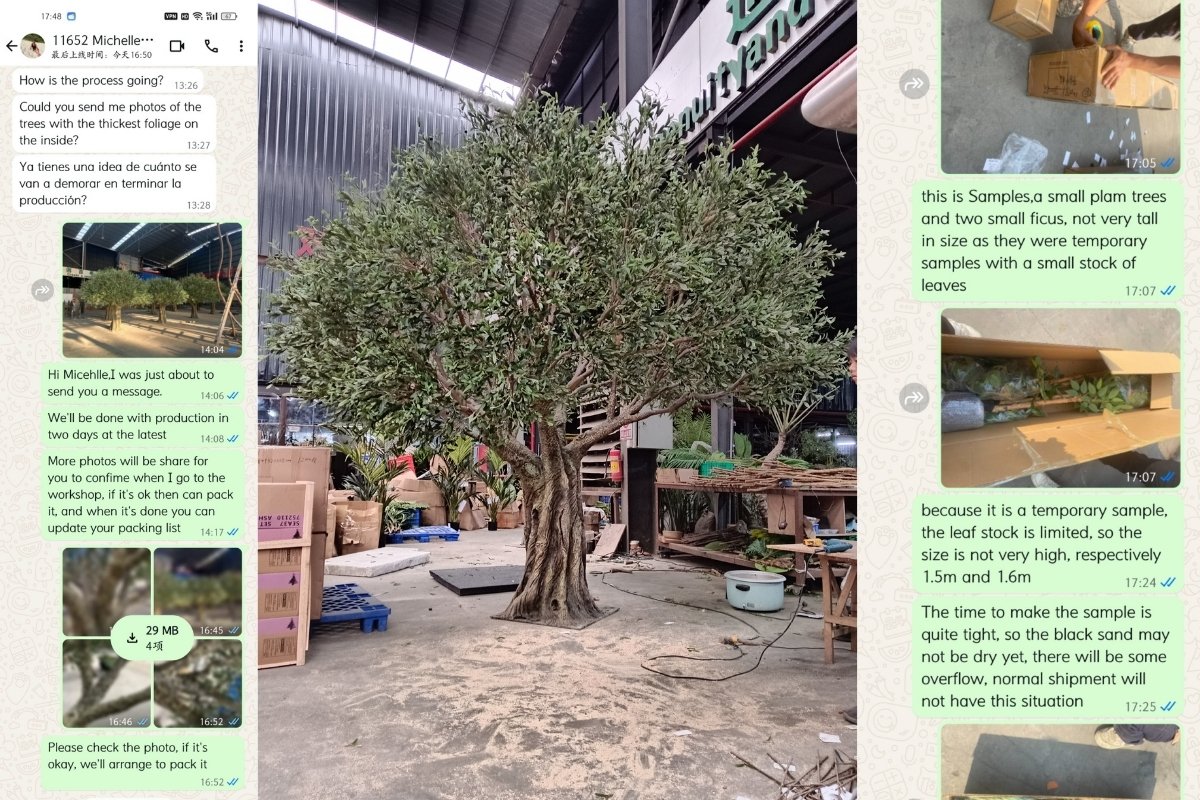
Why final inspection is not enough
I do not like to wait until the end to check everything. If I only inspect the finished tree, I may find a problem too late. Rework takes time. Project schedules become tight. That is why I prefer stage control. I check shape, material match, trunk finish, color tone, and structure during production, not only after production.
For example, if the trunk texture looks too smooth, I want to catch that before coloring is finished. If the canopy feels too heavy on one side, I want to correct it before final assembly. Small errors are easier to fix early. This keeps the timeline healthier.
What I track before shipment
I usually divide my control work into quality points and progress points. Quality points tell me whether the tree meets the agreed standard. Progress points tell me whether the project is moving fast enough for the shipping date.
| Control area | What I review | Client value |
|---|---|---|
| Visual quality | Shape, fullness, color, realism | Better final appearance |
| Structural quality | Joint fit, support strength, base stability | Safer transport and installation |
| Surface finish | Bark texture, paint consistency, moss details | Higher perceived quality |
| Progress status | Production stage, packing stage, shipment readiness | Better schedule visibility |
| Pre-shipment proof | Photos, videos, packing images | More confidence before dispatch |
How communication supports control
I believe communication is part of quality control. When I send photos and videos before shipment, the client can see the real result and compare it with the original requirement. This reduces surprises after arrival. It also creates a final chance to align details before the goods leave the factory. Clients often feel calmer when they see the actual tree, the actual packing, and the actual loading condition. Good progress control is not just internal management. It is shared visibility.
What Do Clients Say After Receiving and Installing Their Artificial Tree Projects?
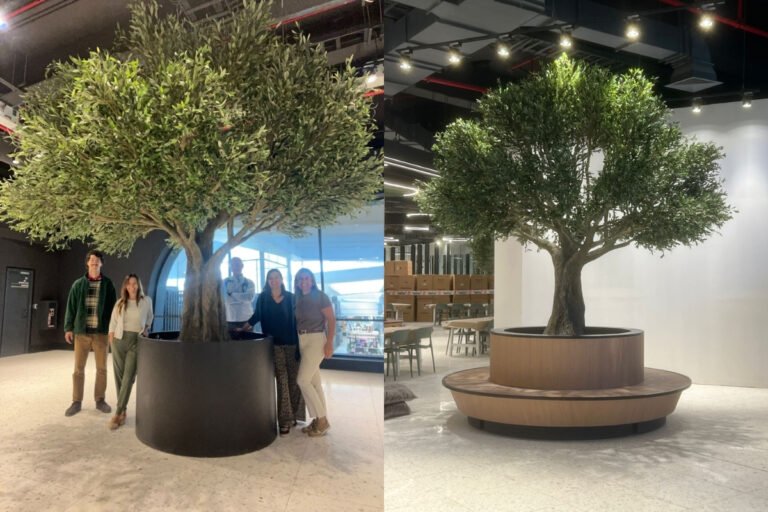
A project is not truly successful when the container leaves. It is successful when the trees arrive, are installed, and look right in the real space. That is why client feedback matters so much to me.
Clients usually respond well when the trees arrive in good condition, match the approved design, install without major trouble, and create the visual effect they expected for the space.
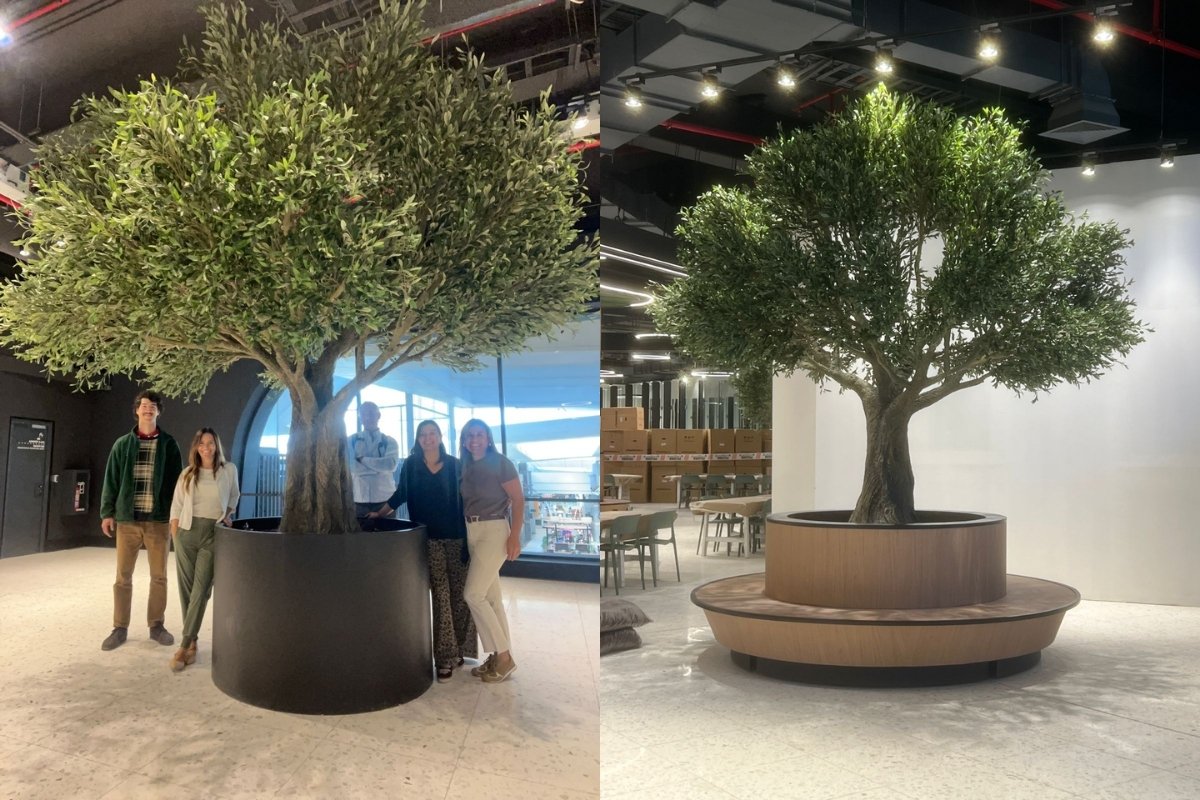
What feedback tells me
Client feedback is more than praise. It shows whether my process really worked. If a client says the packing was clean and organized, that confirms the shipping plan worked. If the installer says the parts were easy to identify, that confirms the structure and labeling worked. If the final photos show the right scale and presence in the space, that confirms the planning stage worked.
I pay close attention to the exact type of feedback clients give. Some focus on appearance. Some focus on installation convenience. Some focus on shipping safety. Together, these comments show the full performance of the project.
The feedback points I value most
| Feedback area | What clients often care about | What it means for the project |
|---|---|---|
| Arrival condition | No serious damage, clean surface, intact branches | Packing worked well |
| Visual result | Realistic shape, correct size, good site effect | Planning and production were accurate |
| Installation | Easy assembly, clear parts, stable structure | Site work was well supported |
| Communication | Timely updates, clear confirmation, smooth follow-up | Project management felt reliable |
| Overall experience | Confidence to reorder or recommend | Trust was built |
Why feedback helps future projects
I use client feedback to improve the next delivery project. If a client says a branch connection could be even faster, I note it. If they say the crate opening marks were helpful, I keep that method. I also like to collect site photos after installation. These photos do two things. They prove the real result, and they help future clients imagine how similar projects can work in their own spaces. In this way, feedback is not only the end of one order. It becomes the start of a better next one.
Conclusion
I do not see delivery as shipping alone. I see it as a full project path that starts with planning and ends when the tree works on site.