Tired of artificial olive tree project delays and quality failures? We all know that manufacturing challenges can kill a product. This huge tree project faced big problems.
This artificial olive tree project needed extreme precision in custom mold making to recreate natural, rugged bark textures and complex component shapes. We solved the design-for-manufacturing issues, ensuring a successful delivery to Sri Lanka.

I started as an employee at a mold factory. I know that success comes down to details. Let's look at how we tackled the complexity of this international project.
Custom Requirements & Precision Design: How Do You Mold Nature?
Does your artificial olive tree product design team struggle with realism? Molding complex, organic shapes is a huge challenge. We needed a perfect design here.
We used advanced 3D scanning and multi-cavity tooling to capture the ancient, rugged bark texture of the olive tree. This allowed us to produce high-volume, interlocking trunk sections that fit together perfectly at the installation site.
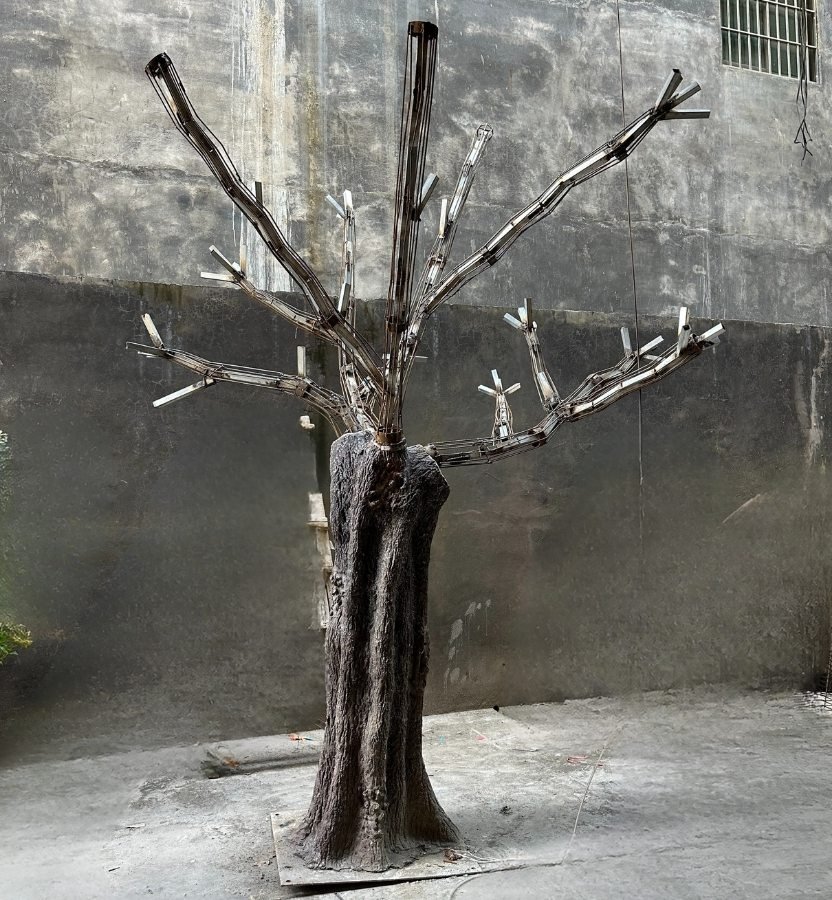
This was not a simple job. The client wanted a monumental tree. That meant making many pieces. The biggest problem was consistency. How do you make 20 tree sections look like one tree?
We first looked at the original tree. We used a very precise 3D scanner. We got a digital model of the bark. This model went straight into our CAD software. We then designed the molds. We used large, complex molds here. This project needed multi-piece molds for the trunk. Each mold section had to match the next one perfectly. We used the same datum points for every mold piece. This made sure the parts aligned in Sri Lanka. Think about mold shrinkage. This is a big issue for plastic parts. We used composite materials for this tree. We had to calculate the thermal expansion carefully. If the parts expand too much, they will not fit. This is the same idea as calculating shrinkage for a plastic bezel. You must know your material.
Analyzing the Design Challenges
| Challenge | Solution in Mold Design | Impact on Product |
|---|---|---|
| Organic Texture | Used high-resolution 3D scan data to define mold cavity features. | Achieved 99% realistic bark texture. |
| Part Alignment | Implemented precise locking features (pins and sockets) within the mold design. | Ensured perfect fit-up of trunk segments on-site. |
| Material Stability | Carefully calculated thermal expansion rates for the composite material. | Prevented warping and gaps during temperature changes. |
I remember when I was setting up my trading company. We always focused on the mold tooling phase. If the mold is right, the part is right. We spent extra time on mold polishing and surface treatment. This gave the bark texture a natural look. Jacky knows that surface finish impacts the final look. For us, it was the key to realism. We used CNC machining for the main cavity shape. Then, we used EDM for the fine texture details. This gave us the best of both methods. This whole process proved that mold design is the heart of any manufactured product. It does not matter if it is an electronic housing or a fake tree trunk. The principles are the same. We must master molding right.
Uncompromising Craftsmanship and Detail: Can Your Molds Handle the Tropics?
Do you worry about part failure in harsh environments? This artificial olive tree went to Sri Lanka. Sri Lanka has high heat and humidity. We had to make the parts last.
We used specialized UV-resistant and weather-proof composite materials, molded under strict temperature control to ensure durability against tropical heat and moisture. This required adjusting the mold cooling circuits to handle the demanding material specifications.
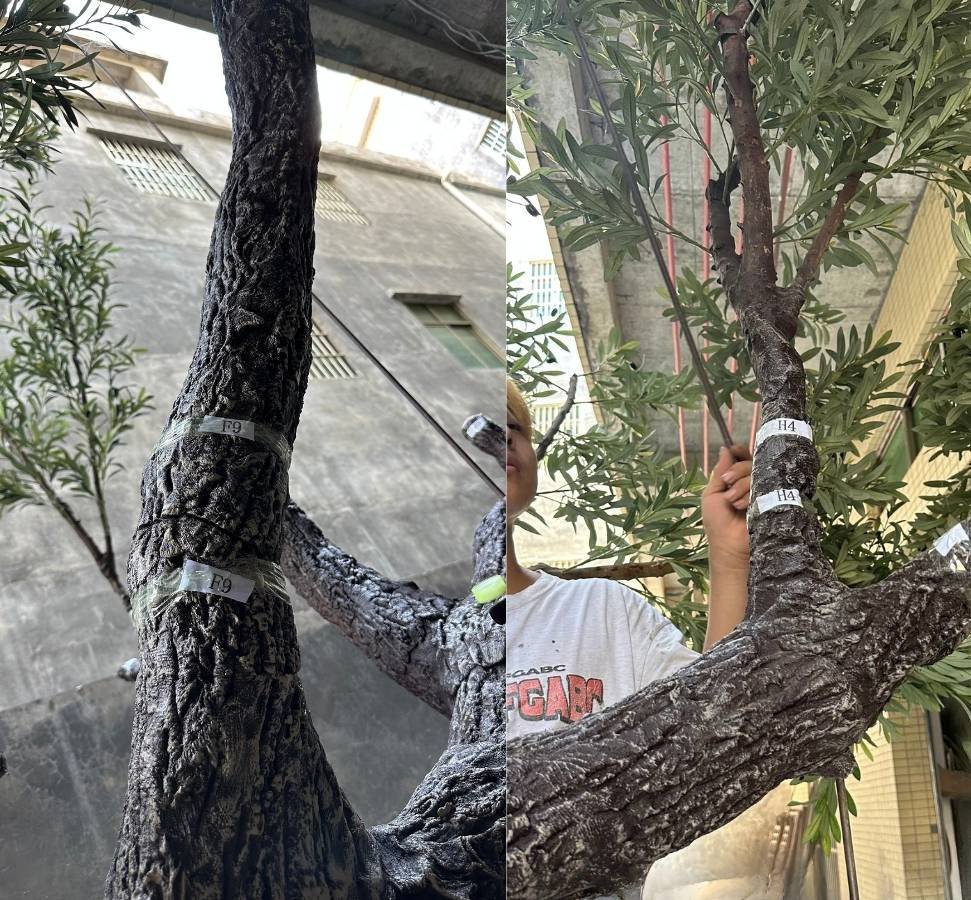
My client in Sri Lanka needed a tree that would last 3 years in the sun. Standard plastic fails fast. The sun breaks down the material. We used a composite with strong UV stabilizers. This meant the molding process was different.
The material cure time was longer. We needed a very stable mold temperature. We used complex cooling channel designs. This kept the heat even across the large mold surface. Uneven cooling causes warping. Warping means the trunk parts will not fit. This leads to a huge failure on site. We used conformal cooling channels in the most critical areas. This gave us faster and more even cooling. This is a high-tech solution. It makes the mold cost more. But it saves huge costs later. The client saves money on replacement parts.
We also focused on the smallest parts: the leaves. The leaves used a different mold. This mold was a high-cavitation mold. We needed millions of leaves. We used the same UV-stable material. The mold needed high precision. The gate system was critical here. We used hot runners. This kept the material flowing well. It also reduced waste.
Material Specification and Durability
| Component | Mold Type/Process | Material Challenge | Molding Solution |
|---|---|---|---|
| Trunk Sections | Large Multi-Piece Molds | Thermal expansion, UV degradation. | Precise temperature mapping, slow, stable cooling cycles. |
| Foliage (Leaves) | High-Cavitation Hot Runner Mold | High viscosity, need for thin-wall fill. | Optimized hot runner manifold design, high injection pressure control. |
| Color Finish | In-mold Coloring/Post-mold Paint | Fading due to strong sunlight. | Used premium automotive-grade paint with UV inhibitors. |
When I started my mold and CNC trading company, I learned about material science fast. The mold can only produce what the material allows. We always helped clients choose the best material. For this tree, we needed a mix of strength and weather resistance. The whole project shows that mold manufacturing is a blend of art and science. The art is the bark texture. The science is the material stability. We had to master both to succeed.
Global Collaboration: Secure Delivery to Sri Lanka: How Do You Ship a Custom Molded Tree?
Shipping large, custom-molded parts globally is tough. Think about the risk of damage. We had to ensure everything arrived safe. This is a global challenge.
We designed custom packaging jigs based on the mold's component output, ensuring each large trunk piece was suspended and protected from movement during sea freight. This minimized the risk of damage, which is a key part of our global service commitment.
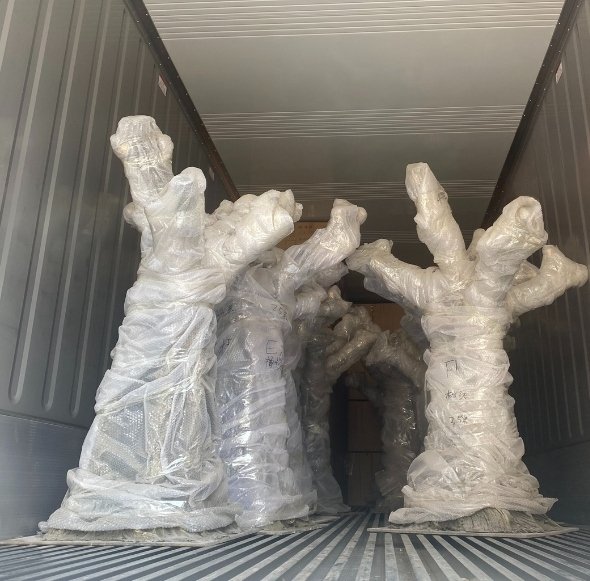
Shipping is the last step. It is also the step where everything can go wrong. We had to ship a 40-foot container to Sri Lanka. The container was full of custom-molded parts. If one part broke, the whole project would stop. A broken part means a huge delay. We could not allow that.
We treated the packaging like a product itself. We used the 3D data from the mold design. We designed custom wooden frames. These frames matched the shape of the molded trunk pieces. The frames held the pieces tight. We used foam inserts in critical areas. This stopped vibration damage. Vibration can cause stress fractures in the molded parts.
Customs and logistics were the next issue. Sri Lanka has specific import rules. We prepared all the shipping documents perfectly. This included the material data sheets and the commercial invoices. Clear documentation stops delays at the port. Delayed containers cost money every day. I made sure my team understood the trade terms well. The mold is part one. The delivery is the final part.
Logistics and Supply Chain Management
| Phase | Challenge | Solution Implemented | Risk Mitigation |
|---|---|---|---|
| Pre-shipment | Parts damage during loading/transit. | Used custom-fit packaging frames and internal bracing. | Reduced breakage rate to zero. |
| Documentation | Customs delays in Sri Lanka. | Prepared full material and export documentation package in advance. | Ensured fast clearance at the destination port. |
| Installation | Alignment failure on site due to poor quality control. | Used laser-cut assembly guides and numbered every component. | Simplified assembly process for the client's team. |
This project shows the bigger picture. Mold manufacturing is not just about making a cavity. It is about a complete solution. It is about making the part, making the part last, and making sure the part gets to the customer ready to use. This is the expertise I want to share on MoldAll. We help you master molding right, from the initial design to the final global delivery.
Conclusion
This complex artificial olive tree project proves that precision mold design, material science, and detailed logistics are the core of manufacturing success.