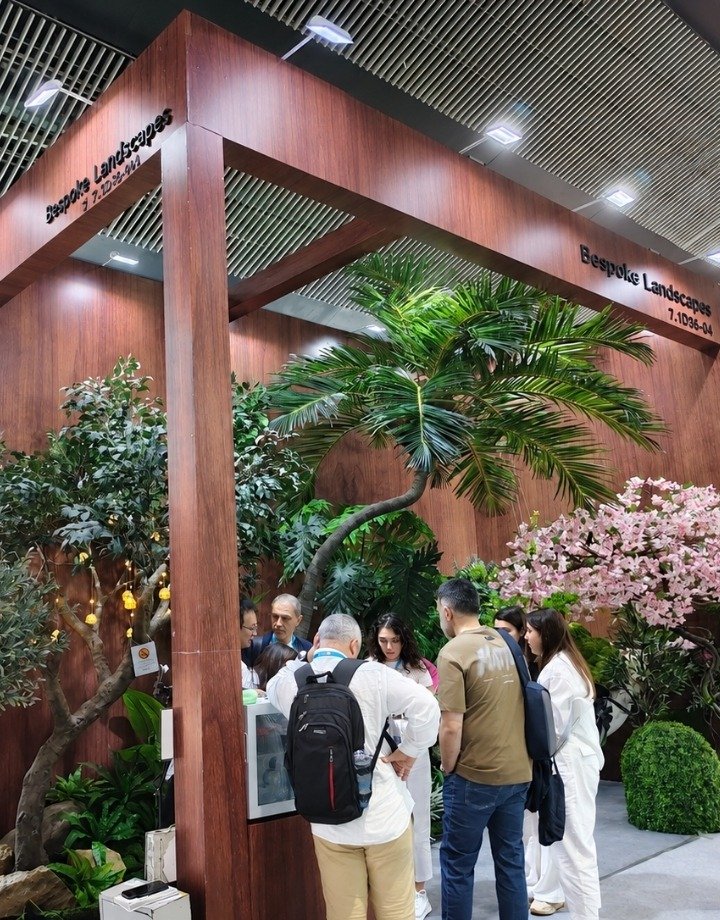
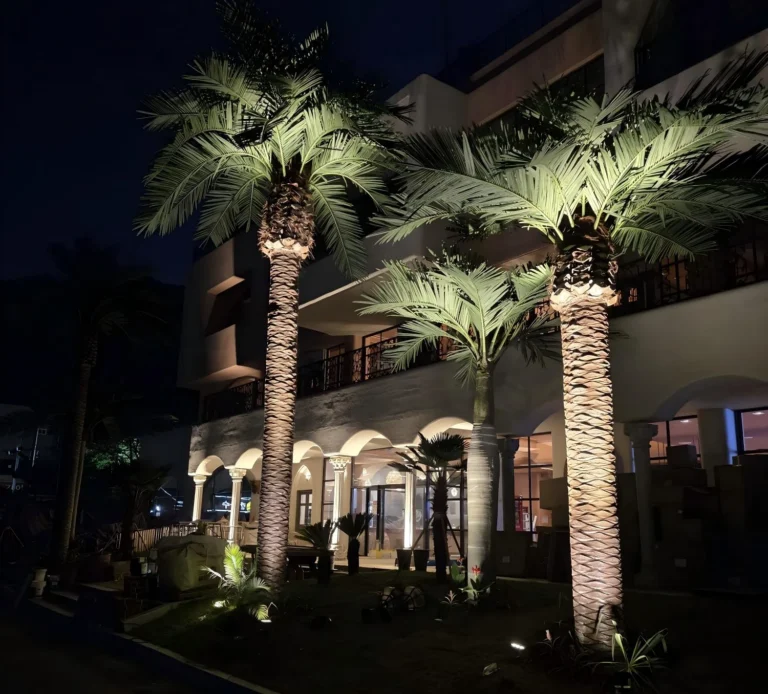
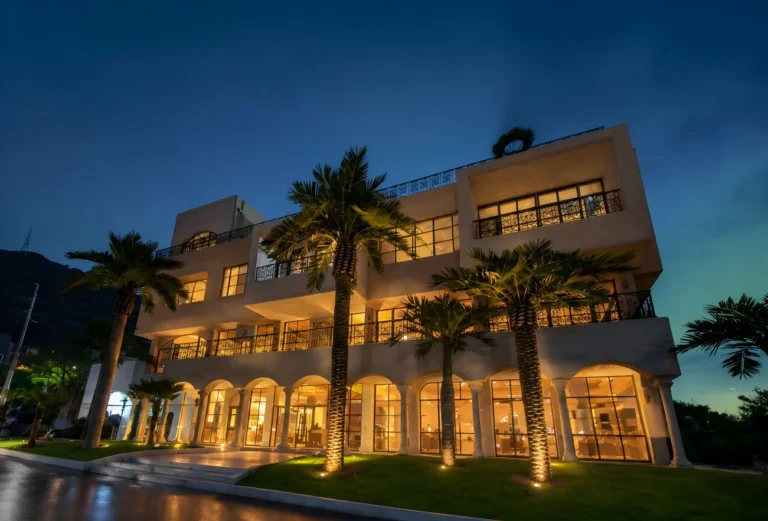
Bespoke Artificial Greenery starts with architectural drawings that can look impressive. The hard part starts when the real site needs the same feeling, scale, and detail.
I translate architectural blueprints into realistic artificial landscapes by reading the design intent, studying the site, customizing structure and foliage, and turning drawings into buildable greenery that fits the project.
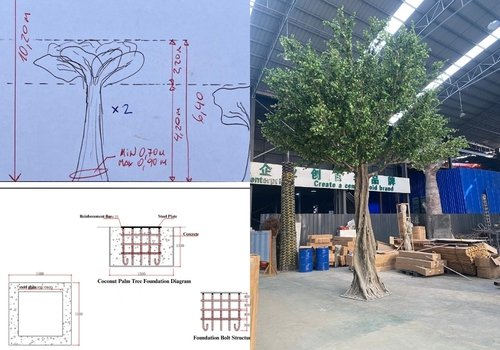
Many clients first see artificial greenery as a product. I see it as a design translation job. A blueprint gives me direction, but it does not solve realism, structure, transport, or installation by itself. I still need to read the space carefully and make many decisions before the design can become a real landscape.The next step is understanding what the architect wants people to feel in the space.I also need to know how the greenery should support traffic flow, visual balance, and long-term use.At the same time, the final result must be practical to produce and install. That is why bespoke artificial greenery matters in commercial projects. It lets me shape every part of the solution around the real project, not force the project to fit a standard catalog item. In this article, I will show how I turn drawings into custom greenery solutions, what details matter most, how I keep the final result realistic, and why bespoke solutions often work better in commercial spaces.
How Do We Turn Architectural Drawings into Custom Artificial Greenery Solutions?
A drawing can show location and size. It does not always show how the greenery should feel when people stand in the space.
I turn drawings into custom artificial greenery by reading plans, elevations, and renderings, then matching plant forms, structure, proportions, and materials to the real space, design mood, and project limits.
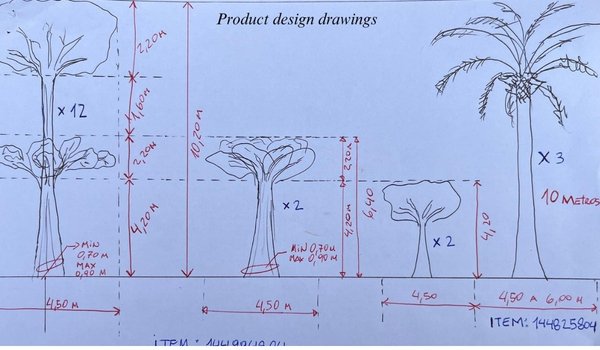
I start by reading the design intent
When I first receive a blueprint, I do not only check dimensions. I also ask what the designer is trying to create. A hotel lobby may need a calm and premium feeling. A restaurant may need soft separation and layered greenery. A retail project may need a strong focal feature that helps the brand image. These goals affect the whole greenery solution. If I only copy the shape in the drawing, the final result may look correct in size but wrong in feeling.
I also look at the project type, the user path, and the sightlines.Then I ask where people will first see the greenery.I also check whether they will see it from below, from a distance, or at close range. This changes how I design leaf density, canopy shape, and trunk detail.
I break the drawing into buildable parts
A rendering may show one elegant tree. In production, that tree becomes a list of decisions. I need to define trunk diameter, canopy width, branch spread, foliage density, planter depth, and fixing method.Another key point is whether the structure must be detachable for shipping and site access.
| Drawing element | What I check | What I turn it into |
|---|---|---|
| Floor plan position | Traffic flow, spacing, visual center | Quantity and layout plan |
| Height mark | Ceiling height, visual scale | Tree or plant height |
| Rendering mood | Modern, lush, tropical, minimal | Species and foliage style |
| Planter detail | Depth, width, hidden structure | Base design and fixing |
| Site condition | Indoor, outdoor, bright, humid | Material and finish choice |
I translate design logic into product logic
This step is where bespoke work becomes valuable. I do not ask which stock item is closest. I ask what kind of greenery should be built to support the space. Sometimes a drawing shows a tree, but the better solution is a multi-layer planting mix. Sometimes a feature tree needs a lighter canopy because the planter depth is limited. Sometimes the rendering looks lush, but the actual site needs lower density because of cleaning access or fire rules.
I have learned that good custom work comes from interpretation, not simple copying. I use the drawing as a guide, but I also study the gap between the image and real construction. That is how I turn an architectural idea into a greenery solution that can actually be produced, packed, shipped, installed, and appreciated in real life.
What Details Matter Most When Customizing Artificial Trees and Plants for a Project?
A project can miss the mark even if the basic size is right. Small details often decide whether the greenery looks cheap or convincing.
The most important custom details are proportion, leaf material, trunk texture, branch rhythm, color tone, structural support, and site suitability, because these details shape realism, durability, and project fit.
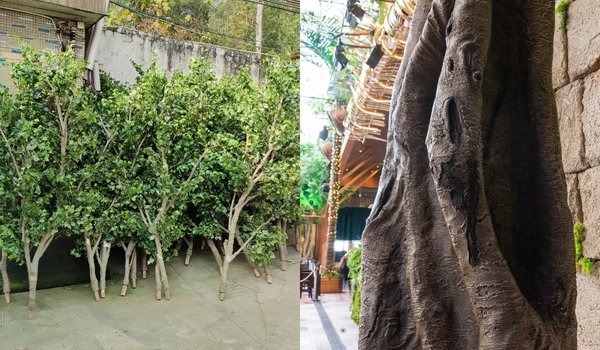
I judge realism through many small details
Clients often say they want a realistic tree. I understand that request, but realism is not one single feature.A realistic result comes from many small parts working together.The size of the leaves matters.Their surface finish matters too.Trunk texture also plays a big role.Branch movement affects the natural look as well.Color variation adds even more realism. Real plants are not flat, shiny, or perfectly repeated. So my custom work should not look that way either.
When I customize a tree, I look at how the canopy reads from both far and near views. From a distance, the silhouette must feel natural and balanced. At close range, the material quality must support the illusion. A good project needs both.
I match detail choices to project conditions
Every project has different demands. A lobby feature tree may need premium bark detail because guests will stand close to it. A high-level mall atrium installation may need a strong silhouette because people will mainly view it from a distance. A semi-outdoor project may need UV-resistant foliage. An indoor commercial project may need flame-retardant options. A site with narrow doors may need modular trunk sections and detachable branches.
| Detail area | Why I check it | Project value |
|---|---|---|
| Leaf material | Controls softness, texture, and realism | Better close-up effect |
| Leaf color mix | Avoids flat or fake appearance | More natural visual depth |
| Trunk finish | Builds premium look | Stronger design impact |
| Branch structure | Shapes canopy and transport logic | Easier assembly |
| FR option | Helps meet indoor project needs | Better compliance |
| UV option | Protects appearance in bright areas | Longer service life |
| Modular build | Solves access and shipping limits | Lower risk on site |
I think about maintenance and long-term use
I do not only think about installation day. I also think about how the greenery will perform after six months or one year. Will the materials still suit the space? Will the tree stay stable in the planter? Will the foliage collect dust in a way that is hard to clean? Will the finish still match the brand image?
This long-term thinking is important in commercial work. A custom solution should not only look strong in photos on day one. It should keep visual value with low effort. That is why I pay close attention to practical details during customization. Good custom decisions reduce future problems. They also make the project easier for the client to manage after handover.
In my experience, this is where bespoke work really proves its value. Standard products often ignore the real site and the long-term use case. Custom work lets me solve both the design goal and the daily use problem at the same time.
Why Is Bespoke Artificial Greenery a Better Choice for Commercial Landscape Projects?
Commercial projects rarely have standard conditions. A standard product may save time at first, but it can create more problems later.
Bespoke artificial greenery is often better for commercial landscape projects because it fits the space, supports the design story, reduces hidden risks, and gives better control over structure, finish, transport, and installation.
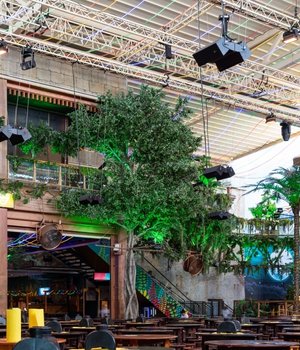
I can build around the project, not around a stock item
Commercial spaces have many limits. Ceiling heights vary. Access doors may be narrow. Planter dimensions may be custom-built. Brand standards may require a specific visual style. In these cases, a stock product often becomes a compromise. It may be too small, too generic, or too difficult to install properly.
With a bespoke solution, I can shape the greenery around the real site. I can design a canopy to match the scale of a double-height lobby. I can split the trunk into parts for easier delivery. I can control bark finish and leaf tone to fit the interior style. I can also repeat the same language across multiple locations for chain projects.
I solve project risks early
One reason I prefer bespoke work is that it lets me manage hidden risks before production is too far along. I can study access limits, fixing points, and planter depth early. I can check whether the visual density in the rendering is realistic. I can also confirm whether the client needs FR or UV options before material decisions are locked in.
| Project factor | Standard option | Bespoke option |
|---|---|---|
| Size fit | Limited | Project-based |
| Visual style | Generic | Aligned with design |
| Structure planning | Basic | Customized |
| Shipping logic | Fixed | Optimized |
| Installation support | Limited | Clearer and safer |
| Brand image support | Weak | Strong |
I support both visual and business goals
A commercial project is never only about appearance. The client also cares about budget control, delivery schedule, installation speed, and long-term use. Bespoke artificial greenery helps me balance these goals in a more practical way. I can simplify assembly to save time on site. I can reduce freight volume through modular design. I can improve maintenance by choosing suitable foliage density and surface finishes.
I have seen many cases where the cheapest standard option created extra labor, poor fit, or weak visual effect. That kind of saving does not really save money. It only moves the cost to a later stage. Bespoke work helps me control the solution earlier. It gives the client more confidence because the greenery is designed for the project from the start.
For commercial landscape work, that level of control is often worth more than a quick catalog choice. The project needs a result that looks right, fits right, and works right. That is exactly where bespoke artificial greenery becomes the stronger option.
Conclusion
I do not just supply artificial greenery. I turn design ideas into realistic landscapes that fit the site, match the vision, and work in real commercial projects.